Snacks
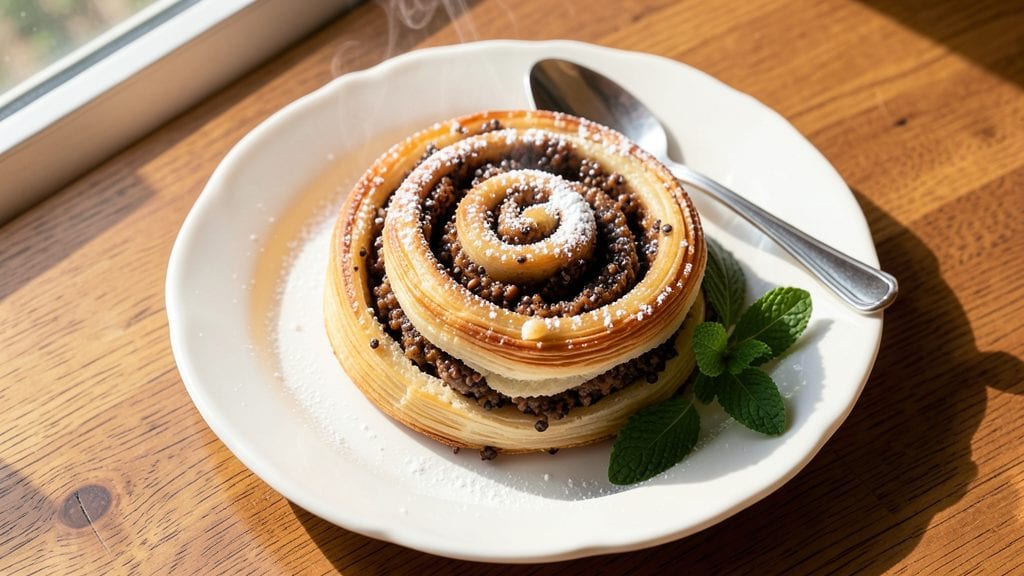
This authentic Hungarian poppy seed roll recipe delivers the delicate flakiness and buttery richness of traditional mákos rétes—a beloved Central European pastry with layers so tender they melt in your mouth.
The secret lies in a laminated dough enriched with cardamom and rum, paired with a fragrant poppy seed filling that balances sweetness with earthy depth. I’ve perfected this recipe through years of testing, ensuring each bite captures the essence of Hungarian bakery craftsmanship without shortcuts.
The dough begins with a yeast-based base that’s rolled, folded, and chilled repeatedly to create those signature flaky, almost translucent layers—a technique that requires patience but transforms into crisp, golden perfection when baked.
Meanwhile, the filling combines ground poppy seeds, sugar, and melted butter, often enriched with walnuts or citrus zest for complexity. This isn’t just dessert; it’s a culinary experience that transports you to Budapest’s bustling markets.
By the time you pull these rolls from the oven, you’ll have golden, shatteringly crisp layers encasing a velvety poppy seed filling that’s sweet yet subtly nutty. The aroma of warm cardamom and caramelized butter fills the kitchen, while the texture contrasts beautifully—crunchy edges, melt-in-your-mouth centers.
Serve them warm with a dusting of powdered sugar or a drizzle of honey for the full Hungarian touch.
This recipe scales perfectly for gatherings, but the process is manageable for home bakers willing to invest in the traditional method. Whether you’re celebrating a holiday or simply craving a taste of Hungary, these rolls deliver restaurant-quality authenticity with every bite. Let’s get started on creating them.
Ingredients for authentic hungarian poppy seed roll
Flaky layers need butter and patience. Sweet filling demands poppy seeds and cardamom.
| Ingredient | Amount | Notes |
|---|---|---|
| Unsalted Butter 🧈 | 2 cups | Cold and cubed for dough layers |
| All-Purpose Flour 🌾 | 4 cups | Sifted, plus extra for dusting |
| Active Dry Yeast 🍞 | ¼ oz | One packet, room temperature |
| Granulated Sugar 🍚 | ¼ cup | For dough enrichment |
| Large Eggs 🥚 | 2 whole | Room temperature, lightly beaten |
| Ground Cardamom 🌿 | 1 tsp | True Hungarian cardamom preferred |
| Rum Extract 🍷 | 1 tbsp | Or substitute vanilla extract |
| Poppy Seeds 🌻 | 1 ½ cups | Ground or finely chopped |
| Light Brown Sugar 🍯 | ¾ cup | Packed, for filling sweetness |
| Heavy Cream 🥛 | ½ cup | Full-fat for richness |
| Walnuts 🥜 | ½ cup | Chopped, optional texture |
| Powdered Sugar 🍚 | ¼ cup | For dusting finished rolls |
| Diamond Crystal Kosher Salt 🧂 | ½ tsp | Fine grain preferred |
| Lemon Zest 🍋 | 1 tsp | Brightens the filling |
The butter is non-negotiable—European-style unsalted like Plugrá or Kerrygold gives that authentic richness. Most grocery stores carry Plugrá in the international section, but if you can't find it, Land O'Lakes unsalted works in a pinch. Chill the butter cubes for at least 30 minutes before using—room temperature butter creates greasy dough. The flour? King Arthur or Gold Medal are reliable; avoid bread flour unless you want denser layers. Cardamom is a game-changer here—Hungarian cardamom pods from specialty stores have deeper flavor than pre-ground blends. If you can't find them, Penzeys sells whole pods that you can toast and grind yourself.
No poppy seeds? Sesame seeds or almond flour can mimic the nutty texture, though the flavor won't be identical. The walnuts are optional but add lovely crunch—Trader Joe's sells pre-chopped walnuts for convenience. For the rum extract, McCormick makes a reliable version, but if you're using vanilla, Madagascar bourbon vanilla has the warmest notes. The heavy cream should be full-fat and cold when mixing with the poppy seed filling to prevent premature melting. If you're making this ahead, prepare the filling last—it keeps best when fresh, and the texture suffers if made too early.
Store the dough between parchment paper in the fridge for up to 24 hours—this actually improves the flakiness. The filling can be made 1 day ahead and refrigerated in an airtight container. For the final rolls, assemble and bake immediately after chilling the dough. These keep at room temperature for 2 days if wrapped tightly in plastic, but they're best enjoyed fresh from the oven. Freeze unbaked rolls for up to 3 months—bake straight from frozen, adding 5-10 minutes to the time. The powdered sugar dusting should be done right after baking while the layers are still warm.
Why You'll Love This Recipe
- No Yeast Nightmare: I’ve made doughs that require patience—this one doesn’t. The yeast mix is a breeze: just warm water, a pinch of sugar, and the yeast blooms in 10 minutes while you cream butter and sugar. No kneading, no waiting hours—just fold, roll, and bake.
- Butter-Sugar Magic: That rich, buttery dough with just a touch of sugar? It’s the kind of flavor that makes you forget about dieting. The poppy seed filling—sweet, nutty, and studded with cardamom—balances the flaky layers perfectly. Honestly, the first bite feels like a hug from your grandma.
- Breakfast or Dessert: Serve it warm with jam for a weekend brunch, or dust it with powdered sugar for a café-style treat. My kids ask for it after school snacks, and my husband sneaks slices for midnight cravings. One recipe stretches for both—no guilt, just joy.
- Leftovers? Best Part: The dough keeps for days in the fridge, and the baked rolls reheat beautifully. I make a double batch on Sundays and freeze half—no wasted ingredients, no last-minute stress. Budget-friendly, too: butter and flour stretch far, and the filling costs pennies. Win-win.
Step-by-step instructions for authentic Hungarian poppy seed rolls
Here's how to craft these legendary pastries with their signature flaky layers and rich filling.
Prepare the Yeast Dough for Maximum Rise
In a large mixing bowl, combine the 4 cups all-purpose flour, 0.25 cup granulated sugar, and 0.5 tsp diamond crystal kosher salt. Make a well in the center and add the 0.25 oz active dry yeast dissolved in ½ cup warm water (about 110°F). Let it sit for 5 minutes until foamy—this ensures your yeast is active.
Add the 2 whole large eggs and 1 tbsp rum extract, mixing until a shaggy dough forms. Gradually incorporate 1 cup of the cold cubed unsalted butter, reserving the remaining 1 cup for later. Knead by hand for 8-10 minutes until smooth and elastic, then cover with a damp towel and let rise in a warm place for 1 hour or until doubled in size. The dough should be soft and springy when pressed—this is your foundation for those iconic flaky layers.
Create the Signature Poppy Seed Filling
In a separate bowl, mix together the 1.5 cups poppy seeds, 0.75 cup light brown sugar, 0.5 cup chopped walnuts, 1 tsp ground cardamom, and 1 tsp lemon zest. Gradually stir in the 0.5 cup heavy cream until fully combined. The filling should be thick but spreadable—this is what gives the rolls their signature sweet-spiced flavor. Cover and refrigerate while you work with the dough.
Here's the thing—Hungarian bakers traditionally use ground cardamom for its warm, aromatic depth. If you can't find it, substitute with vanilla extract, but you'll miss that authentic Hungarian touch. The lemon zest brightens the filling, balancing the richness of the cream and poppy seeds.
Layer the Dough with Butter for Flaky Perfection
Roll out the risen dough on a floured surface into a 12x16-inch rectangle, about ¼-inch thick. Using a pastry brush, spread ⅓ of the remaining 1 cup cold cubed unsalted butter evenly over the dough, leaving a ½-inch border uncovered. Fold the dough into thirds like a letter, then rotate 90 degrees and repeat—this creates the classic Hungarian "folded" layers that give these rolls their signature flakiness.
Roll out again to 12x16 inches, spread another ⅓ of the butter, and fold once more. Chill the dough for 30 minutes before the final fold. This resting period prevents the butter from melting and ensures clean, crisp layers when baked. The key is working quickly but carefully—each fold builds the intricate lamination that makes these rolls legendary.
Assemble and Bake the Rolls
Roll out the chilled dough to 12x18 inches, then spread the poppy seed filling evenly over the surface, leaving a ½-inch border uncovered. Starting from the long side, tightly roll the dough into a log, pinching the seam to seal. Cut into 12 equal pieces and arrange them on a parchment-lined baking sheet, seam-side down.
Brush the tops with the remaining 1 tbsp melted butter and sprinkle lightly with 0.25 cup powdered sugar. Bake in a preheated 375°F oven for 20-25 minutes until golden brown and the internal temperature reaches 190°F. The rolls should sound hollow when tapped on the bottom—this is your cue that they're perfectly baked through. Let cool for 10 minutes before serving to allow the filling to set slightly.
Serve with Warm Cream and Traditional Accompaniments
Serve the rolls warm, dusted with additional powdered sugar if desired. For an authentic Hungarian experience, pair them with heavy cream for dipping or a cup of hot black tea. The contrast of warm rolls with cool cream is a classic presentation that highlights both the flaky texture and sweet filling.
Real talk—these rolls are best enjoyed fresh from the oven. If you need to reheat, wrap them in a damp towel and warm in a 350°F oven for 5-7 minutes. The layers will soften slightly, but the flavor remains rich and comforting. Store leftovers in an airtight container for up to 3 days, though I promise they won't last that long!
Pro Tips For Making Authentic Hungarian Poppy Seed Roll
- Chill the Dough Twice: Let the dough rest at room temp first (about 1 hour), then refrigerate it overnight—yes, even if you’re eager. I used to skip this, and my rolls ended up dense. The second chill firms up the butter layers so they separate beautifully when baked, giving you that signature flaky texture.
- Use Cold Butter Cubes: Cut your unsalted butter into 1-inch cubes and freeze them for 10 minutes before mixing into the dough. This keeps the fat solid longer, preventing it from melting into a greasy mess during rolling. Trust me, your layers will thank you.
- Skip Over-Kneading: The dough for this roll is delicate—knead just until the flour comes together (about 2-3 minutes by hand). Overworking it develops the gluten too much, and your rolls will turn out tough instead of tender. Think "light touch," not "full workout."
- Brush with Egg Wash: Before baking, brush the shaped rolls with a beaten egg mixed with 1 tablespoon water. It’s not just for color—it creates a golden, crackly crust that’s a hallmark of authentic Hungarian versions. (Pro move: Do this right before baking so the wash doesn’t dry out.)
Common mistakes when making perfect results
Overworked Dough
Skip the temptation to over-knead the dough—this disrupts the delicate gluten structure needed for those iconic flaky layers. Once you’ve incorporated all ingredients and the dough is smooth, knead for exactly 8-10 minutes by hand.
Overworking it introduces too much elasticity, which can make the final rolls dense instead of light and crisp. I’ve ruined multiple batches by kneading for 15 minutes—the dough becomes tough, and the layers collapse during baking. 💡
Skipping Chill Times
Chilling the dough between folds is non-negotiable for achieving that signature Hungarian flakiness. If you rush and skip the 30-minute chill after each butter fold, the butter will melt prematurely, creating greasy rather than crisp layers.
I learned this the hard way when I tried to speed up the process—my rolls turned out more like dense pastries than the airy, shatteringly crisp treats they should be. Always chill between folds and after the final roll-out.
Using Warm Butter
Cold butter is your secret weapon for flaky layers, so never use butter that’s softened or melted. If your butter is too warm, it’ll melt into the dough during the folding process, preventing those clean, crisp separations.
Keep your butter cubes in the freezer for 20-30 minutes before using, and work quickly when spreading it on the dough. I recommend European-style unsalted butter like Plugrá or Kerrygold—it has a higher fat content and lower water content, which helps create those perfect layers.
Uneven Filling Distribution
The poppy seed filling needs to be spread evenly across the dough to ensure every bite has that signature sweet-spiced flavor. If you pile it in the center or leave thick spots, you’ll end up with some rolls that are underfilled and others that are bursting with filling.
Spread the filling with a spatula or offset knife to create an even ¼-inch layer, leaving that ½-inch border uncovered. This also prevents the filling from leaking out during baking.
Baking at Wrong Temperature
These rolls require precise baking at 375°F—any lower, and the layers won’t crisp properly, while any higher risks burning the exterior before the interior is fully cooked. Use an oven thermometer to verify your oven’s accuracy, as home ovens often run 25°F hotter or colder than set.
I’ve had batches where the rolls emerged pale and doughy because my oven wasn’t hot enough, or over-browned because it was too hot. Bake until the internal temperature reaches 190°F and the bottoms sound hollow when tapped.
Cutting Before Cooling
Resist the urge to slice into these rolls immediately after baking—they need time to set and firm up slightly. If you cut them too soon, the filling will ooze out, and the layers will collapse.
Let them cool on the baking sheet for 10 minutes before transferring to a wire rack. This brief wait ensures the filling thickens just enough to stay contained, giving you those clean, crisp slices that reveal the perfect balance of texture and flavor. 🥖
Nutrition facts
Frequently asked questions
What makes these Hungarian poppy seed rolls different from other sweet pastries?
The key lies in the laminated dough technique and authentic Hungarian flavors. Unlike simple yeast rolls, these use multiple butter folds for shatteringly crisp layers, while the filling combines poppy seeds, cardamom, and rum extract for that signature warm-spiced sweetness. The cardamom alone sets them apart from vanilla-based pastries.
Can I make the dough ahead of time?
The dough can be prepared up to 24 hours in advance and stored in the fridge, wrapped tightly in plastic. This actually improves the flavor and flakiness. The filling, however, should be made fresh or up to 1 day ahead and kept refrigerated. Never freeze the dough with butter—it can cause the butter to melt and ruin the layers.
Why does my poppy seed filling look too wet?
The filling needs to be thick but spreadable—if it's too wet, it'll leak during baking. Gradually mix in the heavy cream until it reaches a ¼-inch thick consistency when spread. For extra stability, chill the filling for 30 minutes before using. If it's still too runny, add 1-2 tablespoons more poppy seeds to absorb moisture.
What's the best way to store leftovers?
Cool completely, then store in an airtight container at room temperature for up to 3 days. For longer storage, freeze the unbaked rolls for 3 months—bake straight from frozen, adding 5-10 minutes to the time. To reheat, wrap in a damp towel and warm in a 350°F oven for 5-7 minutes to restore the crisp layers.
Can I substitute poppy seeds with another nut?
While you can use sunflower seeds or almond flour for texture, nothing matches poppy seeds' earthy-sweet flavor. For a closer substitute, try sesame seeds (toasted for nuttiness) or walnut flour, but expect a different taste profile. The cardamom and lemon zest remain essential for that authentic Hungarian character.