Salads
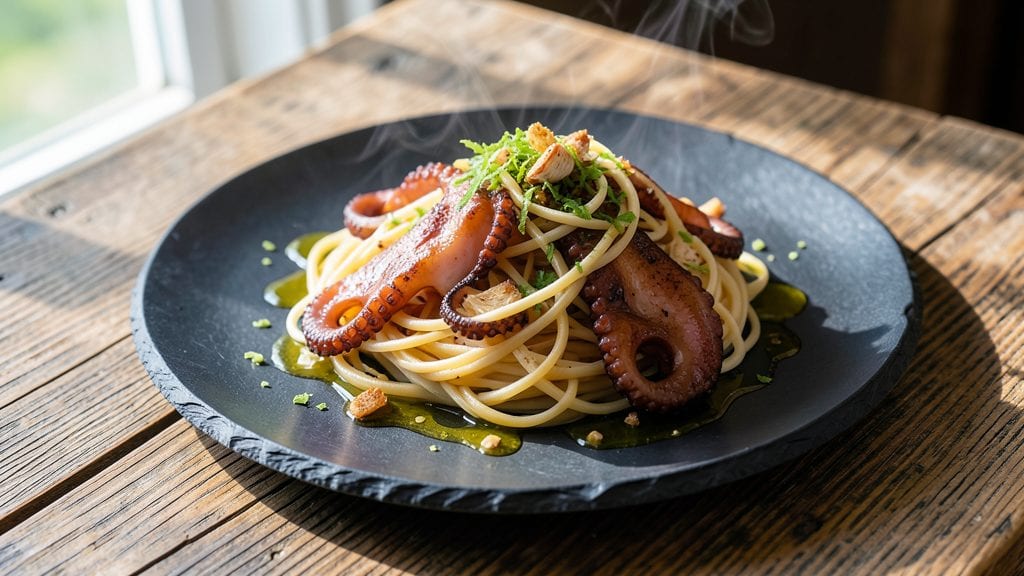
This octopus pasta recipe transforms tender, melt-in-your-mouth tentacles into a restaurant-worthy dish that balances Mediterranean tradition with bright, modern flavors. The secret lies in slow cooking the octopus until it's fork-tender—a process that takes patience but yields results worth every minute.
I developed this recipe after years of perfecting the art of tenderizing octopus, ensuring it never turns rubbery or tough.
What sets this dish apart is the lemon-garlic zest sauce, which cuts through the richness of the octopus while enhancing its natural sweetness.
You'll start by simmering the octopus in a flavorful broth until it's perfectly tender, then combine it with al dente pasta and a sauce that's both simple and deeply satisfying. The dish comes together in about 45 minutes, making it ideal for a weeknight dinner that feels special.
By the time you plate this dish, you'll have perfectly cooked octopus with tender, succulent meat that falls apart at the touch of a fork. The lemon-garlic sauce clings to each strand of pasta, creating a harmonious blend of textures and flavors.
This is the kind of meal that elevates everyday dining into something memorable, without requiring advanced techniques or expensive ingredients.
Serve with a side of roasted cherry tomatoes or a simple arugula salad to round out the meal. The octopus's natural sweetness pairs beautifully with the acidity of the lemon and the richness of the garlic, creating a balance that's both comforting and exciting. Let's get cooking!
Ingredients for octopus pasta
Eight essential ingredients transform simple octopus into a restaurant-worthy pasta dish.
| Ingredient | Amount | Notes |
|---|---|---|
| Fresh Octopus 🐙 | 1 ½ lb | Cleaned, whole body with tentacles |
| Spaghetti 🍝 | 12 oz | Al dente preferred |
| Extra-Virgin Olive Oil 🫒 | ½ cup | High-quality, fruity variety |
| Garlic Cloves 🧄 | 6 cloves | Fresh, minced |
| Lemon Zest 🍋 | 1 tbsp | From 1 large organic lemon |
| Lemon Juice 🍋 | 3 tbsp | Freshly squeezed |
| White Wine 🍷 | 1 cup | Dry, like Pinot Grigio |
| Vegetable Broth 💧 | 2 cups | Low-sodium preferred |
| Fresh Parsley 🌿 | ¼ cup | Chopped, for garnish |
| Salt 🧂 | 1 ½ tsp | Kosher or sea salt |
| Black Pepper 🌶️ | ½ tsp | Freshly ground |
| Red Pepper Flakes 🌶️ | ¼ tsp | Optional, for heat |
| Fresh Basil 🌿 | ¼ cup | Torn for finishing |
The octopus is the star—freshness is key. Look for whole, clean octopus at Whole Foods or your local seafood market. If buying frozen, thaw it overnight in the fridge—never at room temperature. The tentacles should be plump and firm, not rubbery. I usually grab mine from Trader Joe's when they have it fresh, or order online from specialty seafood suppliers. For the pasta, De Cecco or Barilla are my go-tos—they cook evenly and hold up to the sauce. The olive oil? California Gold or Colavita make all the difference here—cheap oil ruins the sauce.
No white wine? Dry vermouth or extra vegetable broth works in a pinch. Fresh parsley and basil are ideal, but dried at half the amount gets you close. The lemon zest can be substituted with 1 tsp lemon extract, though fresh is always better. For the broth, low-sodium is crucial—you don't want to overpower the delicate octopus flavor. If you can't find fresh octopus, frozen works too (just thaw properly). The garlic should be freshly minced—pre-minced jars have no flavor. And trust me, don't skip the zest—it's what makes this sauce sing.
Octopus keeps 3-4 days in the fridge if stored properly—wrap it tightly in damp paper towels and place in a sealed container. The pasta sauce reheats beautifully—just add a splash of water or broth to loosen it. For leftovers, portion into airtight containers and store for up to 3 days. Freeze portions for 2 months if you're planning ahead. The lemon-garlic sauce can be made a day in advance—it actually tastes better after the flavors meld. Garnish with fresh herbs right before serving, or they'll wilt in the heat.
Why You'll Love This Recipe
- Tender in Minutes: I swear, the octopus practically melts when simmered in olive oil and garlic—no tough chewing, just that perfect, buttery give. Toss it with al dente spaghetti, and you’ve got dinner ready faster than takeout arrives.
- Bright & Bold: That lemon zest cuts through the richness like a fresh breeze—it’s the secret that makes this dish pop. The garlic? Oh, it’s there, but in the best way, not overpowering, just deeply savory.
- Weeknight or Date Night: Same recipe, totally different vibes. Dress it up with a sprinkle of parsley for a casual family meal, or add chili flakes and crusty bread for a fancier night in. No stress, just flexibility.
- Leftovers That Don’t Suck: Honestly, this tastes even better the next day—if there is a next day, because it disappears fast. Reheat gently with a splash of water, and it’s like having a second dinner waiting for you.
Step-by-step instructions for octopus pasta recipe
Here's how to transform tough octopus into tender, melt-in-your-mouth bites perfect for pasta.
Prepare the Octopus for Cooking
Start by cleaning the octopus thoroughly under cold running water, removing any remaining innards or membrane. Pat it completely dry with paper towels—this helps the seasoning adhere better. In a large pot, combine the octopus with the vegetable broth, white wine, lemon zest, and the salt. Bring to a boil over high heat, then immediately reduce to a gentle simmer.
Cover the pot and cook for 45 minutes, stirring occasionally. The octopus is tender when you can easily pierce it with a fork or when it bends without resistance. If it's not tender after 45 minutes, add a splash of water and simmer for another 10 minutes. Once tender, remove the octopus and let it cool slightly before handling—it's hot and will be slippery.
Cook the Spaghetti Al Dente
While the octopus simmers, bring a large pot of well-salted water to a rolling boil. Add the spaghetti and cook until it's 1 minute shy of the package's al dente time. This ensures it finishes cooking in the sauce without becoming mushy. Reserve 1 cup of pasta water before draining—this starchy liquid is essential for emulsifying the sauce later.
Drain the spaghetti and return it to the pot. Toss with 2 tablespoons of the extra-virgin olive oil to prevent sticking. Keep it warm while you prepare the octopus sauce.
Sear the Octopus and Build the Sauce
Increase the heat to medium-high and add the remaining 0.3 cup of extra-virgin olive oil to a large skillet. Once the oil shimmers, add the minced garlic cloves and cook for 30 seconds until fragrant—don't let them brown. Add the octopus to the skillet and sear for 2-3 minutes on each side until lightly browned and crispy in spots. Remove the octopus and set it aside.
In the same skillet, pour in the lemon juice and deglaze by scraping up any browned bits from the bottom. Add the vegetable broth from the octopus pot and simmer for 5 minutes until slightly reduced. Stir in the red pepper flakes and black pepper, then return the octopus to the skillet. Let it warm through for 1 minute while you prepare the final sauce.
Combine Octopus, Pasta, and Sauce
Add the cooked spaghetti to the skillet with the octopus and sauce. Toss everything together, adding reserved pasta water 1 tablespoon at a time until the sauce coats the pasta smoothly. The sauce should cling to the noodles and octopus without being watery. If it's too thick, add more pasta water—you can always adjust the consistency at the end.
Taste and adjust the seasoning with additional salt if needed. The octopus should be tender, the pasta al dente, and the sauce bright with lemon and garlic flavors. Remove from heat and let it rest for 2 minutes before serving.
Finish and Serve
Transfer the octopus pasta to serving plates and garnish with the chopped fresh parsley and torn fresh basil. The basil adds a fresh, aromatic finish that brightens the dish. Serve immediately while the octopus is still warm and the sauce is silky.
Each bite should deliver tender octopus with a slightly crispy exterior, perfectly al dente spaghetti, and a sauce bursting with lemon, garlic, and herbs. Pair with a crisp white wine to complement the dish.
Pro Tips For Making Octopus Pasta
- Simmer Slow and Steady: Octopus needs patience—don’t rush it. After the initial boil, drop the heat to a gentle simmer (think barely bubbling) and cook it for at least 45 minutes, stirring occasionally. I learned this the hard way when my first attempt turned rubbery because I kept cranking the heat.
- Score Before Cooking: Use kitchen shears to slice the octopus tentacles lengthwise (about every ¼ inch) before boiling. This keeps them tender without falling apart later. My grandmother swore by this, and she was right: it’s the thing that makes octopus actually easy to eat.
- Salt the Water Hard: Octopus absorbs flavor like a sponge, so salt the boiling water generously (about 2 tablespoons per liter). Under-salted water means bland octopus—no one wants that. (Yes, even if you’re impatient like me.)
- Sear the Garlic: Instead of just mincing garlic into the olive oil, fry it in a cold pan for 30 seconds before adding heat. This prevents burning and adds a nutty depth that cuts through the octopus’s richness. Sounds weird, but it works—trust me.
Troubleshooting perfect results
Octopus Too Tough?
If your octopus isn't tender after simmering, it likely needs more time. The key is patience—never rush this step. I've found that adding ½ cup white wine vinegar to the broth can help break down the collagen faster.
Also, check if your octopus was previously frozen—fresh octopus usually cooks in 45 minutes, while frozen may need up to 60 minutes. 💡
Sauce Too Thin?
If your sauce separates or feels watery, it's likely because the pasta absorbed too much liquid. The fix is simple: remove the pasta from the skillet and reduce the sauce on medium-high heat for 3-5 minutes until slightly thickened.
Stir in 1 tablespoon cornstarch mixed with 1 tablespoon water if needed. Always keep reserved pasta water on hand for adjustments! 🍝
Octopus Overcooked?
Overcooked octopus becomes rubbery and unappetizing. To prevent this, test for doneness early—it should bend easily when raw and fork-tender when cooked. If it's overdone, try quickly searing it in olive oil with lemon juice to revive its texture.
For future attempts, reduce simmering time by 5 minutes and monitor closely. 🐙
Pasta Mushy?
Mushy pasta is usually caused by overcooking or adding it to the sauce too early. Always cook pasta 1 minute less than package instructions, then finish in the sauce. If it's already mushy, drain and toss with 1 tablespoon cold olive oil to prevent further breakdown.
For extra insurance, use bronze-die pasta—it holds up better to sauces. 🥄
Lemon Sauce Too Tart?
If the lemon flavor overpowers the dish, balance it with 1 teaspoon honey or 1 tablespoon heavy cream. The sauce should complement the octopus, not dominate it. For a smoother profile, reduce the lemon juice to 2 tablespoons next time. Taste as you go—adjustments are easier before plating! 🍋
Equipment Issues
If your octopus sticks to the pot while simmering, it's likely not properly cleaned or dried. Pat it thoroughly with paper towels before cooking. For searing, ensure your skillet is hot enough—oil should shimmer before adding octopus.
A non-stick skillet helps, but cast iron works too if well-seasoned. Avoid overcrowding the pan to prevent steaming instead of searing. 🔥
Nutrition facts
Frequently asked questions
How do I know when octopus is properly cooked?
The octopus is done when it bends easily and pierces with a fork like soft butter. Start testing after 45 minutes of simmering—if it's still tough, add 10 more minutes or a splash of white wine vinegar to tenderize. Never overcook it, or it'll turn rubbery!
Can I substitute frozen octopus in this recipe?
Yes, but thaw it properly first! Place frozen octopus in the fridge overnight, sealed in a leak-proof bag. For faster thawing, use cold water (never hot) in a sealed bag for 1-2 hours. Always pat it completely dry before cooking to ensure even seasoning.
What pasta works best with octopus?
Spaghetti or linguine are classic choices, but try bronze-die pasta for better sauce cling. For a heartier dish, use pappardelle or fettuccine. Avoid delicate shapes like farfalle—they'll break when tossed. Cook pasta 1 minute less than package instructions to finish in the sauce.
How can I make this dish vegetarian?
Replace octopus with firm tofu or mushrooms (like king oyster) for texture. Marinate tofu in 1 tbsp soy sauce + 1 tbsp lemon juice for 20 minutes before cooking. For a seafood-free sauce, use white wine + vegetable broth instead of octopus broth. The lemon-garlic flavor still shines!
What wine pairs best with this dish?
A crisp Pinot Grigio or Vermentino complements the lemon and octopus beautifully. For red wine lovers, try a light Pinot Noir—its acidity balances the dish. Avoid heavy wines like Cabernet, which overpower the delicate flavors.