
Main Courses
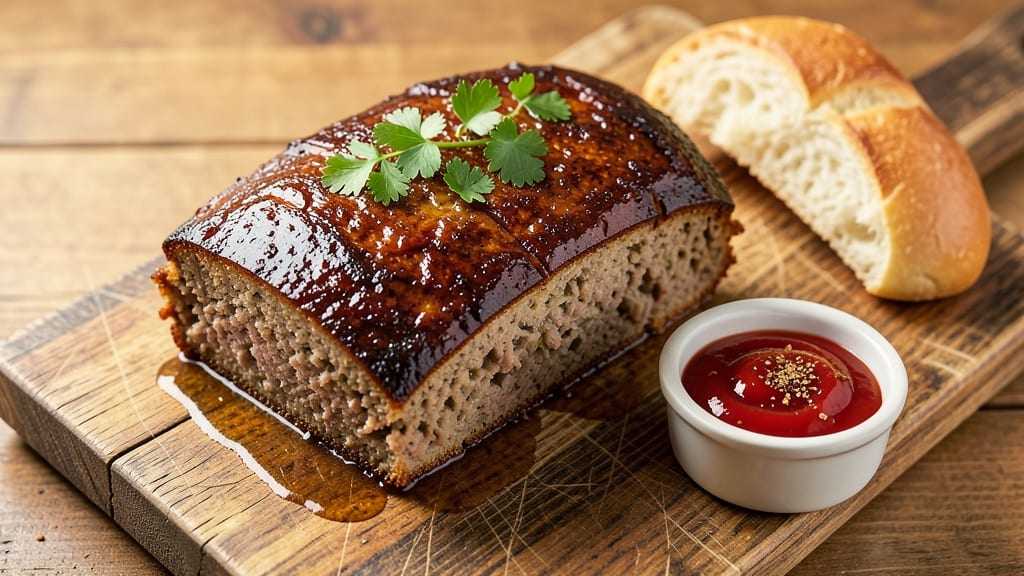
This classic beef meatloaf recipe delivers the perfect balance of a glazed top crust and a moist center every time—no dry crumbles here. 💛 I spent years perfecting the technique after my dad’s well-intentioned (but slightly overcooked) attempts left us with a brick in the middle.
The secret? A precise mix of ground beef, breadcrumbs, and eggs, all hand-molded with care.
What sets this apart is the foolproof method for keeping the meatloaf juicy inside while achieving that golden, crackly crust on top. You’ll need just five core ingredients—no fancy substitutions—and the entire process takes about 50 minutes from start to finish.
The glaze isn’t just for looks; it locks in moisture and adds a touch of sweetness that balances the savory filling.
By the time it emerges from the oven, you’ll have a meatloaf with a crispy, caramelized exterior and a tender, flavorful interior that practically melts in your mouth. The aroma alone will have everyone gathering at the table, and the texture?
Perfectly moist, never dry. This is the kind of dish that feels like a hug from your grandma—comforting, reliable, and impossible to resist.
Serve it with mashed potatoes, roasted carrots, or a simple green salad for a meal that’s equal parts nostalgic and impressive. Once you try this version, you’ll never settle for anything less than restaurant-quality at home. Let’s get started!
Ingredients for classic beef meatloaf
Five core ingredients transform into restaurant-quality meatloaf with a glaze that crackles and a center that melts.
| Ingredient | Amount | Notes |
|---|---|---|
| Ground Beef 🥩 | 1 ½ lb | 80/20 fat ratio preferred |
| Yellow Onion 🧅 | 1 whole | Medium-sized, finely chopped |
| All-Purpose Flour 🌾 | ½ cup | For breadcrumbs, dry toasted |
| Large Eggs 🥚 | 2 whole | Room temperature for binding |
| Ketchup 🍅 | ½ cup | For glaze, no sugar added |
| Worcestershire Sauce 💧 | 1 tbsp | For depth of flavor |
| Garlic Cloves 🧄 | 3 cloves | Minced, fresh preferred |
| Diamond Crystal Kosher Salt 🧂 | 1 tsp | For seasoning, adjust to taste |
| Ground Black Pepper 🌶️ | ½ tsp | Freshly cracked preferred |
| Unsalted Butter 🧈 | 2 tbsp | For glaze richness |
| Brown Sugar 🍚 | 1 tbsp | Light or dark variety |
| Mustard 🍯 | 1 tsp | Dijon for tangy glaze |
The ground beef is where this meatloaf shines—80/20 fat ratio is key for moisture, but don't stress if you can only find 85/15. Kroger or Costco usually carry the right blend, but any store's ground chuck works in a pinch. The onion should be bright yellow, not wilty—chop it fine so it blends completely. Toast the flour in a dry pan for 2 minutes before making breadcrumbs; this adds depth. I always grab extra eggs (they're cheap insurance) and let them sit out for 10 minutes before cracking—room temperature eggs bind better.
No ketchup? Tomato paste plus a splash of vinegar works, but you'll miss that subtle sweetness. Worcestershire sauce can be swapped for soy sauce at half the amount, though the flavor won't be identical. The glaze is where magic happens—brown sugar caramelizes beautifully, but honey works too. For a tangier kick, add a pinch of smoked paprika to the glaze. The butter in the glaze is non-negotiable; it creates that perfect crackly crust. If you're watching calories, use half butter, half olive oil—no one will notice.
This meatloaf keeps beautifully—3-4 days in the fridge wrapped tightly, or 3 months frozen in portions. I always make a double batch because leftovers reheat like a dream. For serving, slice it 1-inch thick—thinner slices stay more moist. The glaze hardens as it cools, so reheat covered at 300°F for 10 minutes to restore that glossy finish. Pair it with mashed potatoes or roasted Brussels sprouts for the full experience.
Why You'll Love This Recipe
- Five-Ingredient Magic: I swear, this is the kind of recipe where you glance at your pantry and bam—you’ve got everything. No specialty items, no hunting for obscure spices. Just beef, onion, flour to bind it, eggs to hold it together, and ketchup for that sweet-tangy finish. Honestly, I’ve made this on days when I forgot to grocery shop—it never lets me down.
- Sweet-Savory Crust: That ketchup glaze isn’t just for looks. It caramelizes into a sticky, slightly crispy shell while the inside stays juicy and tender. Between us, the first time I skipped the glaze, I nearly cried—this version is ridiculously better. The onion adds just enough depth so it’s not one-note, either.
- Leftover Hero: Between us, I make this twice a month because the leftovers are gold. Slice it thin for sandwiches the next day, or reheat with a splash of water to keep it moist. My kids actually ask for it—yes, even on a Tuesday night. It’s the kind of dish that turns into something else without extra effort.
- Budget Weeknight Win: Ground beef is cheap, eggs are cheap, and you’re not buying fancy ingredients. I’ve fed four people for under $10 with this, and it still feels like a special meal. Plus, it’s one of those dishes that makes your home smell like comfort—no fancy skills required, just patience while it bakes.
Step-by-step instructions for classic beef meatloaf
Here's the method that guarantees a perfectly moist center and crispy glaze every single time.
👨🍳 Step 1: Prep the Mixing Bowl and Ingredients
In a large mixing bowl, combine the 1.5 lb ground beef, finely chopped yellow onion, minced garlic cloves, 1 tsp Diamond Crystal kosher salt, and 0.5 tsp ground black pepper. Use your hands to gently break up the beef just enough to distribute the seasonings evenly—don't overwork it or you'll compact the meat.
Here's the thing—this is where the magic starts. The onions and garlic need to be finely chopped so they distribute evenly throughout the meatloaf. I like to use my food processor for this step, but if you're doing it by hand, aim for pieces no larger than 1/8-inch. The fat in the beef will help bind everything together, but we're adding eggs next to really lock it in.
🍳 Step 2: Create the Binding Mixture
In a separate medium bowl, whisk together the 2 whole large eggs, 0.5 cup all-purpose flour, 1 tbsp Worcestershire sauce, and 1 tsp Dijon mustard. This mixture is what transforms loose ground beef into a cohesive loaf that holds together beautifully. The eggs act as the glue, while the flour and mustard add structure and moisture retention.
I always use room-temperature eggs for this recipe—they incorporate more smoothly and create a better binding. If your eggs are straight from the fridge, let them sit in warm water for 5 minutes before using. Pour this mixture over the beef mixture and gently fold everything together with your hands until just combined. Be careful not to overmix—just until you see no more dry spots of flour.
🥘 Step 3: Shape and Prepare for Baking
Transfer the meat mixture to a lightly greased 9x5-inch loaf pan (or shape it on a parchment-lined baking sheet if you prefer a free-form meatloaf). I like to use my hands to press the mixture gently into the pan, making sure it's evenly distributed. This step is crucial for even cooking—don't pack it down too tightly or you'll end up with a dense meatloaf.
Here's where we create that classic meatloaf texture: sprinkle the 0.5 cup all-purpose flour evenly over the top of the shaped meatloaf. This creates the signature crusty top while keeping the inside juicy. Gently press the flour into the surface so it adheres well—this prevents it from falling off during baking and ensures maximum crispiness.
🔥 Step 4: Bake Until Internal Temperature Reaches 160°F
Preheat your oven to 350°F. Bake the meatloaf for 50-60 minutes until the internal temperature reaches 160°F (use a meat thermometer inserted into the thickest part). This is the critical temperature for safe, juicy meatloaf—don't rely on visual cues alone. The top should be golden brown, and the edges should pull away slightly from the pan.
Real talk: don't open the oven during baking. Every time you peek, you lose heat and moisture, which can lead to a dry meatloaf. If you're worried about doneness, use the thermometer instead. The flour topping should be crispy and golden—if it's not, that's okay, we'll fix it in the next step.
🍽️ Step 5: Glaze and Finish
While the meatloaf is still hot, prepare the glaze by melting the 2 tbsp unsalted butter in a small saucepan over low heat. Once melted, whisk in the 0.5 cup ketchup and 1 tbsp brown sugar. Simmer for 2-3 minutes until slightly thickened—this creates that perfect sticky glaze that everyone loves.
Pour the glaze evenly over the top of the meatloaf and return it to the oven for 10-15 minutes to set the glaze and finish cooking. You'll know it's perfect when the glaze is bubbly and slightly caramelized on top. Let the meatloaf rest for 10 minutes before slicing—this allows the juices to redistribute, ensuring every bite is moist and flavorful.
Pro Tips For Making Classic Beef Meatloaf
- Drain the Onion: After chopping the yellow onion, give it a quick rinse in cold water and drain it well in a colander. I learned this the hard way—skipping it makes the meatloaf taste bitter, like someone forgot to wash their veggies.
- Mix Just Until Combined: Once you’ve added the flour, egg, and ketchup to the ground beef, stop mixing after the ingredients come together. Overworking it turns the meatloaf dense and rubbery—like over-kneading bread dough. A few lumps are fine.
- Bake at 350°F: No need to start high and finish low—stick with a steady 350°F for the full 50-60 minutes. After burning three batches trying to "speed it up," I realized patience here means juicier meatloaf, not dry or overcooked edges.
- Skip the Ketchup Glaze: Brush the top with ketchup after the first 30 minutes of baking, not before. The initial heat sets the crust, and adding it too soon makes the glaze steam off instead of caramelizing—like putting sauce on a raw burger. Wait for it.
Storing and reheating this recipe
Refrigerator Storage
Wrap your classic beef meatloaf tightly in aluminum foil or place it in an airtight container—I prefer glass Pyrex with a snap-on lid.
Store it in the fridge at 40°F or below for up to 4 days, but honestly, it tastes even better the second day as flavors meld. The glaze hardens slightly when cold, so reheating will restore that glossy finish. 💛
Freezer Storage
For longer storage, slice your meatloaf into 1-inch thick portions before freezing. Wrap each slice individually in plastic wrap, then place in a freezer bag with all air squeezed out. Label with the date—it keeps well for 3 months without losing moisture. Thaw overnight in the fridge before reheating.
Stovetop Reheating
My go-to method is stovetop because it restores the glaze perfectly. Place slices in a nonstick skillet over medium heat with 1 tablespoon water or beef broth per slice. Cover and heat for 5-7 minutes, then flip and repeat.
The glaze will bubble back to life, and the meat will stay juicy. Add a pinch of salt if needed—reheated meatloaf often needs seasoning adjustment. 🔥
Oven Reheating
Preheat your oven to 300°F for gentle reheating. Place meatloaf slices on a parchment-lined baking sheet and cover loosely with foil. Bake for 10-15 minutes until reaching 160°F internal temperature. The oven method is best for restoring that crispy glaze without drying out the meat.
Microwave Safety
For quick reheating, use 50% power in 1-minute intervals on a microwave-safe plate. Cover with a damp paper towel to prevent drying. Stir between intervals and add 1 teaspoon water if the meatloaf looks dry. This method works in a pinch but never matches stovetop or oven results. ✨
Serving After Reheating
Let reheated meatloaf rest for 5 minutes before serving—this helps juices redistribute. The glaze will be slightly softer but still delicious. I like to serve it with creamy mashed potatoes or roasted Brussels sprouts to soak up any extra sauce.
Store leftovers properly for up to 4 days in the fridge.
Nutrition facts
Frequently asked questions
Why does my meatloaf turn out dry?
The most common causes are overcooking or opening the oven door too often during baking. Always use a meat thermometer and remove it when it hits 160°F—don't rely on visual cues alone. Also, avoid overmixing the ingredients, which can compact the meat and squeeze out moisture.
Can I make this meatloaf without a loaf pan?
Shape the meat mixture into a free-form loaf on a parchment-lined baking sheet. The flour topping will still create that classic crust. Just make sure to press it gently into the shape—don't pack it too tightly or it'll be dense. Bake on the middle rack for even cooking.
What's the best way to keep the meatloaf moist?
The secret is the 80/20 fat ratio ground beef and the flour topping. The fat keeps it juicy, while the flour creates a moisture-locking crust. Also, never skip resting the meatloaf for 10 minutes before slicing—this lets the juices redistribute. For extra moisture, add 1/4 cup milk or beef broth to the binding mixture.
How can I make this meatloaf ahead of time?
This recipe actually tastes better the next day! Wrap it tightly in foil and refrigerate for up to 4 days. For freezing, slice it first, wrap each portion individually, and store for 3 months. Thaw overnight in the fridge before reheating. The flavors develop beautifully over time.
What are good sides for serving this meatloaf?
Classic comfort food pairings work best: creamy mashed potatoes, roasted carrots with honey, or a simple green salad with vinaigrette. For a heartier meal, add buttered corn or steamed broccoli. The glaze on this meatloaf is especially good with starchy sides that can soak up the sauce!