Breakfast & Brunch
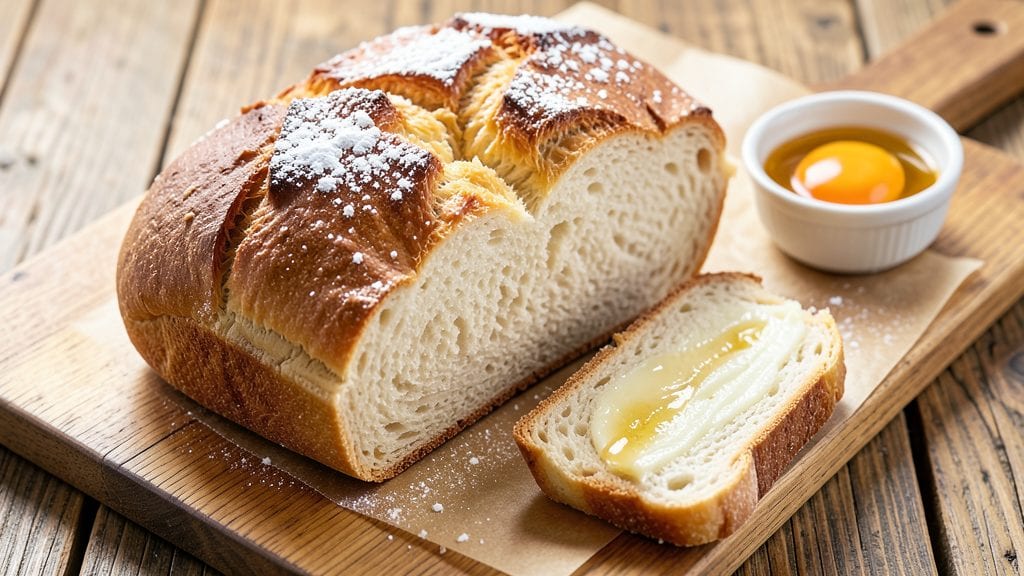
This authentic Japanese milk bread recipe delivers the signature combination of soft, fluffy exterior and sweet, custard-like interior that makes shokupan so beloved. The secret lies in the tangzhong method—a precise roux technique that creates the bread's signature moisture and tenderness.
I've perfected this recipe after years of testing, ensuring every slice achieves that melt-in-your-mouth texture while maintaining the delicate balance of sweetness and subtle milk flavor.
The process begins with a carefully measured tangzhong (flour and water mixture cooked to 160°F), which forms the foundation of the dough's signature softness. From there, we incorporate milk powder, sugar, and butter to develop that signature sweetness and richness.
The dough requires proper kneading—either by hand or stand mixer—to achieve the right elasticity, followed by precise proofing times to ensure optimal rise and texture.
What you'll end up with is authentic Japanese milk bread that's impossibly soft on the outside with a sweet, custard-like interior that practically oozes when sliced. The aroma alone will transport you to a Tokyo bakery, and the texture defies comparison to standard bread.
This recipe delivers professional-quality results at home, whether you're baking for breakfast, desserts, or simply enjoying a slice with butter.
Perfect for beginners with patience, as the process requires attention to detail but no advanced skills. The dough can be shaped into classic loaves, rolls, or even French-style baguettes—all while maintaining that signature milk bread flavor. Let's get started on creating your own bakery-style shokupan at home.
Ingredients for authentic japanese milk bread
Fourteen ingredients. One magical dough. The secret's in the tangzhong.
| Ingredient | Amount | Notes |
|---|---|---|
| Bread Flour 🌾 | 3 ½ cups | High-protein for structure |
| Whole Milk 🥛 | 1 ½ cups | Cold, full-fat preferred |
| Unsalted Butter 🧈 | ½ cup | Softened, European-style preferred |
| Granulated Sugar 🍚 | ¼ cup | Superfine preferred for smoothness |
| Milk Powder 🥛 | ¼ cup | Non-fat, for signature flavor |
| Active Dry Yeast 🍞 | 2 ¼ tsp | Fresh yeast preferred |
| Large Eggs 🥚 | 1 whole | Room temperature |
| Granulated Salt 🧂 | ½ tsp | Diamond Crystal preferred |
| Water 💧 | ¼ cup | Room temperature |
| Tangzhong Mixture 🌾 | ½ cup | Flour + water cooked to 160°F |
| Cornstarch 🌾 | 1 tbsp | For dough softness |
| Egg Wash 🥚 | 1 whole | 1 egg + 1 tbsp water |
| Toasted Sesame Seeds 🌰 | 1 tbsp | Optional for garnish |
The bread flour is non-negotiable—King Arthur or Caputo make all the difference. I always grab mine from King Arthur's website or a specialty baking store. The milk powder? Nestlé or Carnation brands are consistent, but check the expiration date—old powder tastes bitter. For the tangzhong, use a candy thermometer to hit 160°F exactly. Too hot and it breaks down the gluten; too cool and the dough won't develop properly. The butter? European-style like Plugrá melts cleaner and gives that bakery-style richness. Store your flour in the freezer to keep it fresh—it lasts 6-12 months that way.
No bread flour? All-purpose plus 1 tbsp vital wheat gluten works in a pinch. Milk powder out? Skip it—just use extra milk, but the flavor won't be identical. Butter too expensive? Vegetable shortening at half the amount keeps things soft, though it lacks flavor. The yeast is the most critical—if it's old, your bread won't rise. Test it by dropping a packet in warm water with sugar; if it bubbles in 5 minutes, it's good. For the egg wash, pasteurized eggs work if you're avoiding raw eggs. The sesame seeds? Toast them in a dry pan for 30 seconds—they'll smell amazing and add crunch.
This dough needs patience. Shape it into a loaf, cover with plastic wrap, and refrigerate overnight for 8-12 hours. The cold rise develops flavor and makes slicing easier. Store baked bread in a bread box or paper bag at room temp for 3 days, or freeze slices wrapped in parchment for 3 months. Reheat in a 200°F oven for 5 minutes to restore that bakery-fresh warmth. Leftovers? Toast them—they're even better the second time around.
Why You'll Love This Recipe
- No-Knead Magic: I swear by this—just mix, let it rise, and bake. The bread flour and milk powder do all the heavy lifting while I sip coffee, no stand mixer required.
- Buttery Cloud Inside: That tender crumb? Pure bliss. The whole milk and unsalted butter create a melt-in-your-mouth texture that’s ridiculously satisfying—no dry bites here.
- Breakfast to Picnic: Toast it for a lazy morning, stuff it with ham and cheese for lunch, or pack slices for a picnic. It’s my go-to for any meal, any day.
- Leftovers That Last: A single batch feeds my family for days. The milk powder keeps it fresh longer, and I freeze slices for quick toast—no waste, all flavor.
Step-by-step instructions for authentic Japanese milk bread
Here's how to craft that signature soft, airy texture with the signature sweetness inside.
Prepare the Tangzhong Mixture
In a small saucepan, combine 0.5 cup bread flour and 0.25 cup water from the ingredients list. Whisk until smooth to eliminate any lumps. Cook over medium-low heat, stirring constantly with a silicone spatula, until the mixture reaches 160°F and thickens into a translucent paste. This technique, called tangzhong, creates that signature Japanese bread softness that lasts for days.
Remove from heat immediately and let it cool to room temperature. The mixture should form a thick, gelatinous consistency that holds its shape when spooned. If you're short on time, you can make this up to 24 hours ahead and store it in the refrigerator—just bring it back to room temperature before using.
Mix the Dough Components
In the bowl of a stand mixer fitted with the dough hook attachment, combine the cooled tangzhong mixture, 1.5 cups whole milk, 0.5 cup softened unsalted butter, 0.25 cup granulated sugar, 0.25 cup milk powder, and 1 tbsp cornstarch. Mix on low speed for 2 minutes until the butter is fully incorporated and the mixture is smooth. Add 1 whole large egg and 0.5 tsp granulated salt, mixing for another 1 minute until fully combined.
In a separate small bowl, dissolve the 2.25 tsp active dry yeast in 0.25 cup room temperature water. Once the yeast is frothy (about 5-10 minutes), add it to the wet ingredients in the mixer. Increase speed to medium and mix for 3-4 minutes until the dough begins to pull away from the sides of the bowl and becomes slightly elastic. The dough should be sticky but manageable—this is normal for Japanese milk bread.
Develop the Dough
Switch your mixer to medium-high speed and knead the dough for 6-8 minutes until it becomes smooth and elastic. The dough should pass the "windowpane test"—stretch a small piece between your fingers and it should thin to the point where you can see light through it without tearing. If the dough feels too stiff, add 1 teaspoon of water at a time until it reaches the proper consistency.
Once the dough is properly developed, transfer it to a lightly greased bowl, cover with a damp kitchen towel, and let it rise in a warm place (like a turned-off oven with the light on) for 1-1.5 hours, or until it has doubled in size. You'll know it's ready when the dough springs back slowly when poked with a finger—this indicates proper fermentation and development of gluten structure.
Shape and Proof the Loaves
Punch down the risen dough to release air, then divide it into 4 equal portions (about 8 ounces each). On a lightly floured surface, gently shape each portion into a smooth ball. For the signature Japanese milk bread shape, use your fingers to create a small well in the center of each ball—this will create the characteristic sweet pocket inside.
Place the shaped dough balls into four greased 8x4-inch loaf pans, seam-side up. Cover the pans with a damp towel and let them rise again for 30-45 minutes, or until they've expanded to fill about 75% of the pan. Preheat your oven to 350°F during the final 10 minutes of proofing to ensure even baking.
Bake to Golden Perfection
Whisk together 1 whole egg wash (1 egg + 1 tbsp water) and brush it generously over the tops of the loaves. Sprinkle with 1 tbsp toasted sesame seeds if using. Bake in the preheated oven for 25-30 minutes, until the tops are golden brown and the internal temperature reaches 190-195°F when measured with an instant-read thermometer.
Remove from the oven and let the bread cool in the pans for 5 minutes, then transfer to a wire rack to cool completely. The bread will continue to set as it cools, developing that signature soft, pillowy texture. For best results, let it cool for at least 30 minutes before slicing—this ensures clean cuts and maximum softness. Store in an airtight container at room temperature for up to 3 days, or freeze for longer storage.
Pro Tips For Making Authentic Japanese Milk Bread
- Chill the Dough Properly: After the first rise, pop your dough in the fridge for 12–24 hours—yes, even if you’re eager. I learned this the hard way when my loaves turned dense and gummy; the slow cold fermentation develops that signature softness and flavor. Use a container with a lid to keep moisture in, and don’t skip it unless you’re okay with bread that’s closer to a dense roll than the pillowy texture you want.
- Whisk the Milk Powder: Don’t just dump milk powder into the dough—whisk it into the warm milk first until fully dissolved. I used to eyeball it, and my bread would sometimes taste slightly grainy. A smooth mixture guarantees even distribution, and the milk’s warmth helps activate the powder’s flavor. Stir until it’s a uniform liquid, no clumps allowed.
- Shape Loaves Tightly: Handle the dough gently but firmly when shaping—think of it like wrapping a present. A loose loaf collapses during baking, while a tight, rounded shape (with the seam side down) ensures that signature dome. If your dough resists, let it rest 10 minutes before reshaping; it’ll be easier to work with and hold its form better in the pan.
- Butter the Pan Lightly: Use just enough unsalted butter to coat the pan—about ½ teaspoon melted and spread thinly with a paper towel. Too much butter makes the bread greasy, and too little means it sticks. Brush the sides and bottom, then dust lightly with flour. This keeps the bread from clinging while still giving that classic buttery finish on the outside. (Yes, even if you’re lazy like me, resist the urge to slather it.)
Health benefits of authentic japanese milk bread
Soft Texture Magic
The tangzhong method—cooking flour and water to 160°F—creates a gelatinous base that locks in moisture for days of softness. This technique replaces traditional bread's starchy crumb with a pillowy, almost cake-like texture. The cornstarch in the dough further enhances tenderness by breaking down starch chains during baking. 🌾
Unlike regular bread that dries out within 24 hours, this recipe maintains its softness for 3-5 days when stored properly. The milk powder and whole milk add protein and fat that keep the crumb moist longer. Even after toasting, the interior remains deliciously soft—something standard bread can't achieve.
Digestible Protein Boost
Japanese milk bread delivers high-quality protein from its bread flour and whole milk, with about 10 grams per slice. The milk powder adds extra casein protein, which digests more slowly than wheat gluten, helping you feel full longer.
This makes it an excellent choice for breakfast or snacks when paired with Greek yogurt or avocado.
The low gluten content (compared to bagels or sourdough) makes it easier to digest for those with mild gluten sensitivities. However, it's not gluten-free—vital wheat gluten is still present. For a gluten-free alternative, substitute with a 1:1 gluten-free flour blend like Bob's Red Mill, though texture may differ slightly.
Natural Energy Source
The complex carbohydrates in bread flour provide sustained energy, while the sugar gives a quick glucose boost. The tangzhong method also creates a lower glycemic index than white bread because the gelatinized starch breaks down more slowly.
This makes it a better choice for maintaining steady blood sugar levels than typical sliced bread.
For an extra energy kick, pair your milk bread with peanut butter or almond butter—the healthy fats will slow digestion further. I often make a quick breakfast sandwich with scrambled eggs and cheddar cheese for a protein-packed meal that keeps me full until lunch. 💪
Comfort Food Without Guilt
While it contains sugar and butter, the portion sizes in this recipe are controlled enough to fit into a balanced diet. One slice provides about 150 calories, with 3 grams of fat (mostly from the butter) and 25 grams of carbs.
The milk components also contribute calcium and vitamin D, making it a more nutrient-dense option than many commercial breads.
For a lighter version, reduce the sugar to 0.125 cup and use low-fat milk—though you'll sacrifice some of that signature sweetness. The egg wash adds richness but can be replaced with milk if you're watching cholesterol.
Even with these adjustments, the bread remains soft and flavorful while cutting calories by about 20%.
Nutrition facts
Frequently asked questions
Why does Japanese milk bread have that signature sweet pocket?
The sweet pocket comes from shaping the dough into balls with a small well in the center before baking. This creates a hollow space that fills with the custard-like sweetness from the milk powder and sugar during baking. The tangzhong method also helps maintain this soft, moist interior that contrasts with the pillowy crust.
Can I make this without a stand mixer?
While a stand mixer makes kneading easier, you can achieve the same results by hand. Use a dough scraper to help fold and stretch the dough for 10-12 minutes until it becomes smooth and elastic. The key is patience—keep working the dough until it passes the windowpane test (stretching thin without tearing).
What if my dough doesn't rise properly?
If your dough isn't rising, check these common issues: yeast may be old (test it in warm water with sugar—it should bubble in 5 minutes), the water might be too hot (110°F is ideal), or the room may be too cold. Try placing the dough in a warm oven with the light on or use a proofing box for consistent results.
How do I store Japanese milk bread to keep it soft?
Store baked bread in an airtight container at room temperature for 3 days, or freeze slices wrapped in parchment for 3 months. For reheating, warm slices in a 200°F oven for 5 minutes to restore softness. Never refrigerate—this makes bread dry out faster.
Can I substitute milk powder with regular milk?
You can, but the flavor won't be identical. Milk powder adds depth and helps create that signature custard-like sweetness. If substituting, use 1.75 cups whole milk instead of 1.5 cups and reduce sugar slightly (0.125 cup) to balance sweetness. The texture may be slightly less tender, but still delicious!