
Sauces & Condiments
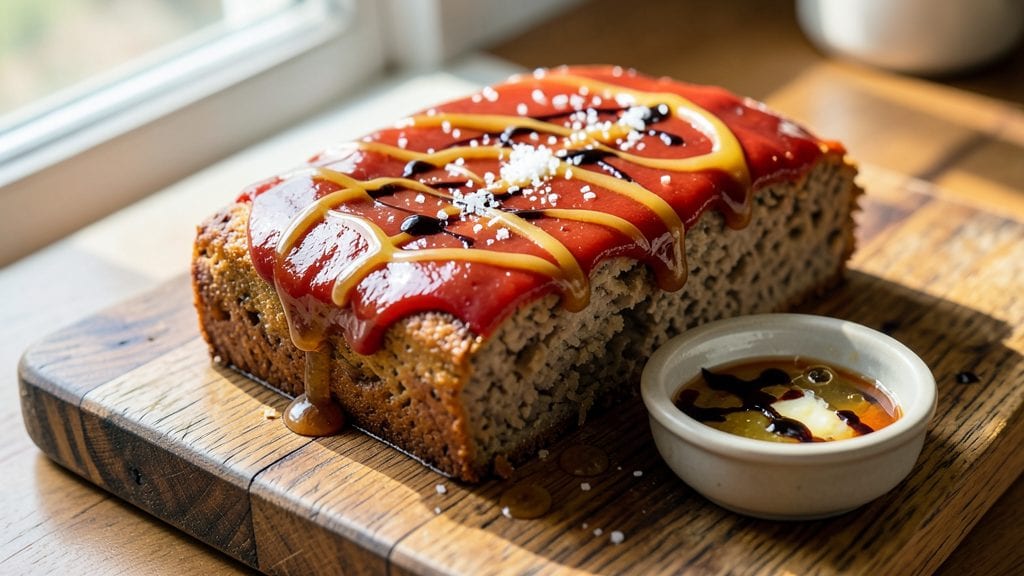
This simple meatloaf glaze recipe transforms ordinary meatloaf into a showstopper with just five ingredients and 15 minutes of hands-off time. The secret lies in balancing sweetness and tang—ketchup provides acidity, honey adds depth, and a touch of mustard keeps it from tasting one-note.
I’ve tested this glaze with countless meatloaves, and it never fails to deliver that glossy, caramelized finish that makes everyone ask for seconds.
The best part? This glaze requires no special skills—just a saucepan and a whisk. You’ll simmer the ingredients until thickened, then brush it over the meatloaf during the final 10 minutes of baking. The result is a sticky-sweet glaze that clings perfectly, adding moisture and flavor without overwhelming the dish.
Even picky eaters love this version, which means it’s ideal for family dinners or holiday gatherings where you want to impress.
What sets this glaze apart is its versatility—it works equally well with traditional meatloaf, turkey loaf, or even meatball subs. The combination of ketchup and honey creates a rich, caramelized crust that’s irresistibly glossy, while the mustard adds a subtle kick.
Once you try it, you’ll never go back to plain old ketchup again. The process is straightforward, and the ingredients are likely already in your pantry.
Ready to elevate your meatloaf game? This glaze delivers restaurant-quality results with minimal effort, making it perfect for weeknight dinners or special occasions. Let’s get started—your next meatloaf will be the star of the meal.
Ingredients for simple meatloaf glaze
Five pantry staples. One saucepan. Glossy, caramelized magic for meatloaf in minutes.
| Ingredient | Amount | Notes |
|---|---|---|
| Ketchup 🍅 | ½ cup | High-quality for balanced flavor |
| Honey 🍯 | ¼ cup | Pure, liquid form preferred |
| Dijon Mustard 🧄 | 1 tbsp | Mild for subtle tang |
| Balsamic Vinegar 🍷 | 1 tbsp | For depth and gloss |
| Unsalted Butter 🧈 | 1 tbsp | Full-fat for richness |
| Granulated Sugar 🍚 | 1 tbsp | Balances acidity |
| Diamond Crystal Kosher Salt 🧂 | ¼ tsp | Fine grain for even seasoning |
| Ground Black Pepper 🌶️ | ⅛ tsp | Freshly ground for heat |
The ketchup and honey are non-negotiable—Heinz or Hunt's for ketchup (no weird additives) and Manuka honey if you want to splurge, but regular works too. Trader Joe's has great options for both at reasonable prices. The balsamic vinegar adds that restaurant-quality depth, so grab a high-quality aged balsamic if you're feeling fancy. I always check the label for '100% pure' on the honey—skip the processed stuff. The Dijon mustard? Maille or Whole Foods brand are my go-tos—they’ve got that perfect balance of tang without overpowering.
No honey? Maple syrup at the same amount works in a pinch, though it’ll be slightly earthier. Short on balsamic? Red wine vinegar at half the amount gives a similar acid punch. The butter is key for that glossy finish—don’t substitute margarine. If you’re avoiding sugar, reduce the honey to 2 tbsp and add 1 tsp corn syrup to maintain consistency. For a spicier kick, swap the black pepper for crushed red pepper flakes at half the amount. The salt? Diamond Crystal is my pick—it dissolves perfectly and doesn’t clump.
This glaze keeps for 2 weeks in the fridge, sealed tightly. Reheat gently in a small saucepan with 1 tbsp water to loosen it up—it’ll thicken again as it cools. Freezes beautifully for up to 3 months in ice cube trays for single-use portions. I always make double batches because it disappears fast—great for slathering on meatloaf, turkey loaf, or even grilled chicken. The leftovers? Perfect for drizzling over pancakes or toast if you’re feeling indulgent.
Why You'll Love This Recipe
- Five-Ingredient Magic: I swear by this combo—ketchup, honey, mustard, balsamic, and butter. That’s it. No fancy pantry raids or last-minute grocery runs. Honestly, I keep everything in my fridge already, so I’m always ready when meatloaf cravings hit.
- Sweet-Savory Balance: The honey cuts through the tang of Dijon and balsamic, while the butter adds this silky richness. Not too sweet, not too sharp—just that perfect harmony where every bite feels like a little celebration. (Yes, even on a Tuesday night.)
- Leftovers That Shine: This glaze doesn’t dry out or turn gloopy. I’ve made it ahead, reheated it, and even used it to glaze chicken or pork chops later. The flavors only get better as they sit, so you’re not stuck with a sad, overcooked mess.
Step-by-step instructions for sticky-sweet meatloaf glaze
A perfectly balanced glaze takes just minutes to make—sweet, tangy, and rich with depth.
Melt the Butter and Honey Together
In a small saucepan over medium heat, combine the 1 tablespoon unsalted butter and 0.25 cup honey. Let them melt together, stirring occasionally with a silicone spatula. You'll notice the honey thickens slightly as it warms, but don't let it come to a boil—just until the butter is fully incorporated and the mixture is smooth. This step creates the perfect base for the glaze, where the honey's natural sweetness begins to meld with the butter's richness.
Watch for small bubbles forming around the edges of the pan—that's your signal the butter has melted completely. If you see any browned bits forming, immediately reduce the heat to low to prevent burning. The goal here is a silky, golden liquid that coats the back of a spoon. Remove the pan from heat once the butter is fully melted and set it aside for now.
Whisk in Ketchup, Mustard, and Vinegar
Return the saucepan to the medium heat and add the 0.5 cup ketchup, 1 tablespoon Dijon mustard, and 1 tablespoon balsamic vinegar. Stir vigorously with a whisk to combine everything smoothly. The ketchup will help thicken the glaze while adding that classic meatloaf flavor, and the mustard brings a subtle tang that balances the sweetness.
Let the mixture simmer gently for 2-3 minutes, stirring occasionally. You'll see the glaze begin to thicken slightly as the liquid reduces. This is where the flavors start to marry—watch for the mixture to turn a rich, deep red color. If it starts to bubble vigorously, reduce the heat slightly to maintain a gentle simmer. The balsamic vinegar adds depth and a glossy finish, so don't skip this step.
Add Sugar, Salt, and Pepper for Balance
Remove the saucepan from heat and stir in the 1 tablespoon granulated sugar, 0.25 teaspoon Diamond Crystal kosher salt, and 0.125 teaspoon ground black pepper. The sugar helps balance the acidity from the vinegar and mustard, while the salt and pepper round out the flavors. Give it a taste at this point—you should notice a harmonious blend of sweet, tangy, and savory notes.
If the glaze feels too thick, you can thin it slightly by adding 1-2 teaspoons of water at a time, whisking until smooth. The glaze should coat the back of a spoon but still flow easily. This is the perfect consistency for brushing onto meatloaf—sticky enough to cling but not so thick it becomes gloppy. Let the glaze cool for 5 minutes before using, as this allows the flavors to settle and the texture to stabilize.
Brush and Bake for Maximum Flavor
Preheat your oven to 375°F if you haven't already. Using a pastry brush, generously coat the top of your meatloaf with the glaze, spreading it evenly to the edges. The glaze should look glossy and inviting. Place the meatloaf on a baking sheet and return it to the oven for the final 10-15 minutes of baking.
Watch the glaze as it bakes—it will bubble and darken slightly, forming a beautiful caramelized crust. This is where the magic happens, as the heat intensifies the flavors and creates that irresistible sticky-sweet finish. The meatloaf is done when the glaze is bubbly and the internal temperature reaches 160°F. Let it rest for 5 minutes before slicing to allow the juices to redistribute, ensuring every bite is moist and flavorful.
Pro Tips For Making Simple Meatloaf Glaze
- Simmer the Glaze: Start with a slow simmer over medium-low heat—high heat turns ketchup into a sad, watery mess. Let it bubble gently for 8-10 minutes, stirring occasionally, until it thickens enough to coat the back of a spoon. (Yes, even if you’re impatient like me, resist the urge to crank the heat.)
- Balance the Sweet: Taste as you go—too much honey? Add a splash of balsamic vinegar to cut the cloying sweetness. Too sharp? A pinch of salt or a drizzle of Dijon mustard smooths it out. (I learned this the hard way after serving a glaze that tasted like a candy store explosion.)
- Butter Last: Add the unsalted butter only in the final 2 minutes of simmering—it burns faster than you’d think. Stir it in until just melted and glossy, then immediately brush it onto the meatloaf while warm. (Cold butter = clumpy glaze = disaster.)
- Skip the Sugar: Store-bought ketchup is already packed with sugar, so measure your honey carefully—start with 1 tablespoon and adjust. Too much? The glaze will turn into syrup. (I was skeptical until I tried it—now I never go back.)
Pro cooking tips for this dish
Heat Control Secrets
Never let your glaze boil—medium heat is your best friend. Too much heat causes the honey to scorch and the ketchup to split, creating a bitter, grainy texture. I keep my heat at medium-low after adding the ketchup to prevent any bubbling.
A small saucepan (8-inch) gives you better control than a large one, so use what you have but keep it snug. 🌡️
Whisk Like a Pro
Use a balloon whisk instead of a spoon for smoother results. The thin wires create tiny air bubbles that help thicken the glaze evenly. Stir constantly for the first 2 minutes after adding ketchup to prevent sticking.
I dip my whisk in cold water every 30 seconds to keep the glaze from seizing—this trick prevents clumps from forming. 💫
Glaze Consistency Fixes
If your glaze is too thick after simmering, add 1 teaspoon water at a time while whisking. For a thicker glaze (like for meatball subs), simmer uncovered for an extra 1-2 minutes to reduce liquid.
The perfect consistency should coat the back of a spoon but still flow freely—like honey mustard in texture. 🍯
Timing Your Application
Apply the glaze only in the last 10-15 minutes of baking. The residual heat from the meatloaf will help it caramelize beautifully. I use a pastry brush with a long handle to reach all edges without disturbing the loaf.
For extra shine, brush a second time 5 minutes before removing from the oven. 🔥
Double-Batch Hack
Make twice the recipe—this glaze disappears fast! Store extras in glass jars in the fridge for up to 2 weeks. Reheat gently in a small saucepan with 1 tablespoon water to loosen.
I freeze leftovers in ice cube trays for single-use portions—perfect for quick touch-ups on meatloaf or turkey loaf later. ❄️
Flavor Boosters
Want more depth? Add ½ teaspoon smoked paprika or ¼ teaspoon garlic powder when you stir in the sugar. For a tangy twist, swap 1 tablespoon of the honey for 1 tablespoon of apple cider vinegar.
These tweaks elevate the glaze from basic to restaurant-worthy without complicating the recipe. 💡
Nutrition facts
Frequently asked questions
Can I make this glaze without honey?
Yes! Swap the ¼ cup honey for ¼ cup maple syrup or 2 tablespoons brown sugar + 2 tablespoons water. Maple syrup adds a deeper caramel flavor, while brown sugar gives a molasses-like richness. Just reduce the sugar by 1 tablespoon if using brown sugar to avoid over-sweetness.
How do I fix a glaze that's too thin or too thick?
For a thin glaze, simmer uncovered for 1-2 extra minutes to reduce liquid. For a thick glaze, whisk in 1 teaspoon water at a time until it reaches a honey-like consistency. The ideal texture should coat the back of a spoon but still flow freely. Think thick syrup, not paste.
Can I use this glaze on other dishes besides meatloaf?
This versatile glaze works perfectly on turkey loaf, meatball subs, grilled chicken, or even roasted pork chops. For vegetables, reduce the honey to 2 tablespoons and add ½ teaspoon smoked paprika for a sweet-and-smoky twist. Just adjust baking times accordingly.
Why did my glaze turn grainy or separate?
This usually happens from too much heat or not whisking enough. Keep heat at medium-low after adding ketchup, and whisk constantly for the first 2-3 minutes. If it separates, blend it briefly with an immersion blender or strain through a fine-mesh sieve. The key is patience—don't rush the simmering.
How long can I store leftover glaze?
Store in an airtight glass jar in the fridge for up to 2 weeks. For longer storage, freeze in ice cube trays for single-use portions. Reheat gently in a small saucepan with 1 tablespoon water to restore consistency. The glaze thickens as it cools, so thin with water if needed.