
Breakfast & Brunch
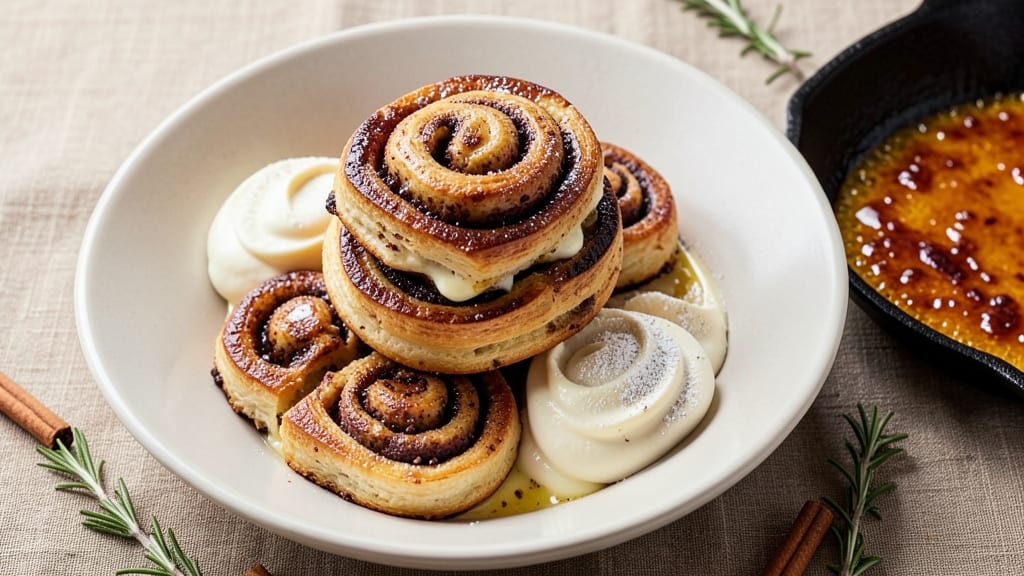
Mrs. B's cinnamon rolls recipe delivers the kind of flaky, buttery layers and gooey caramel filling that make every bite worth the effort.
This is the version I've perfected over years—starting with a foolproof dough that rises just right, then rolling it with cinnamon-sugar and cream cheese filling for that signature texture. The secret lies in precise proofing and baking times to ensure tender, pillowy rolls with a crackly top.
What sets these apart is the balance between traditional techniques and modern accessibility. You can make the dough from scratch for that authentic bakery taste, or use store-bought dough if you're short on time.
Either way, the filling—a mix of cream cheese, brown sugar, and melted butter—creates that irresistible gooey center. The rolls proof overnight in the fridge for maximum flavor development, then bake to golden perfection with a caramel drizzle that ties everything together.
The result is a batch of cinnamon rolls so decadent and inviting that they disappear faster than you can say "second helping." The layers stay light and airy, the filling melts at the slightest touch, and the caramel glaze adds just enough sweetness to make them dangerously addictive.
Whether you're baking for a weekend brunch or a special occasion, these rolls will be the star of the table.
Ready to make them? The process is simpler than it looks, and I'll walk you through every step—from mixing the dough to cutting the rolls and achieving that restaurant-quality finish. Let's get started!
Ingredients for mrs b's cinnamon rolls
Twelve ingredients, twelve rolls of pure comfort. The secret to Mrs. B's legendary cinnamon rolls lies in these simple, quality staples.
| Ingredient | Amount | Notes |
|---|---|---|
| All-Purpose Flour 🌾 | 5 cups | Sifted for light texture |
| Granulated Sugar 🍚 | ¼ cup | For dough sweetness |
| Active Dry Yeast 🍞 | 2 ¼ tsp | Or 1 packet instant yeast |
| Unsalted Butter 🧈 | ½ cup | Melted, full-fat for richness |
| Large Eggs 🥚 | 2 whole | Room temperature preferred |
| Whole Milk 🥛 | ¾ cup | Warm for yeast activation |
| Diamond Crystal Kosher Salt 🧂 | 1 tsp | Adjust to taste |
| Cream Cheese 🧀 | 8 oz | Room temperature, full-fat |
| Light Brown Sugar 🍚 | 1 cup | Packed, for filling |
| Ground Cinnamon 🌿 | 2 tbsp | Ceylon preferred for purity |
| Unsalted Butter 🧈 | ½ cup | Cold, cubed for filling |
| Heavy Whipping Cream 🥛 | ½ cup | Cold for caramel drizzle |
| Granulated Sugar 🍚 | ½ cup | For caramel glaze |
| Vanilla Extract 🍯 | 1 tsp | Pure, high-quality |
The yeast is non-negotiable—Fleischmann's RapidRise or Saf-Instant are my go-tos, but any active dry yeast works if proofed properly. For the flour, King Arthur or Gold Medal brands give the best rise, but don't stress if you've got store-brand. The butter? Plugrá or Land O'Lakes in the dairy aisle—full-fat only. Cream cheese matters too: Philadelphia Original is the gold standard, but any full-fat block-style works if softened properly. Pro tip: warm your milk to 110°F before mixing—yeast loves it, and your dough will rise faster.
No cream cheese? Substitute equal parts softened butter and powdered milk, though the texture won't be identical. Running short on brown sugar? White sugar plus a pinch of molasses mimics the flavor. The cinnamon can be swapped for cassia if you're on a budget, but Ceylon has a lighter, more delicate taste that pairs beautifully with the caramel. For the caramel drizzle, half-and-half works in a pinch, but the cream adds that signature richness. And if you're feeling fancy, add a pinch of cardamom to the filling—trust me, it elevates everything.
Dough keeps for 3 days in the fridge, wrapped tightly in plastic. The filling and glaze can be prepped ahead and stored separately for up to 5 days. Baked rolls reheat beautifully—wrap in foil and warm at 300°F for 10 minutes. For freezing, bake fully, cool completely, then wrap individually in plastic. They'll stay fresh for 3 months—perfect for lazy weekends. And if you make extras? They're gone before breakfast anyway.
Why You'll Love This Recipe
- No Yeast Fuss: I’ve made cinnamon rolls that require proofing in the fridge overnight—this one? Just mix, let it rise once while you make the filling, then bake. The yeast wakes up fast, and you’re done in under an hour. (Yes, even on a Tuesday night.)
- Buttery Swirl Magic: That rich, gooey cinnamon-sugar filling? It’s all thanks to the unsalted butter melted right into the dough—no dry, crumbly texture here. The sugar caramelizes just enough to give every bite that perfect balance of sweet and soft.
- Breakfast or Dessert: Honestly, I make these for both. Serve them warm with cream cheese glaze for brunch, or let them cool slightly and pack them for lunch the next day. They’re just as good cold as they are fresh out of the oven.
- Budget-Friendly Staples: Between us, this recipe uses pantry basics—flour, sugar, butter, eggs—that won’t break the bank. A single batch stretches to feed four, and leftovers reheat beautifully. My daughter picks out the extra rolls for school snacks, but I always save one for myself.
Step-by-step instructions for Mrs b's cinnamon rolls
Here's how to create pillowy, caramel-drenched cinnamon rolls that rival your favorite bakery.
Activate the Yeast and Prepare the Dough Base
In a small bowl, combine the 0.75 cup warm whole milk (about 110°F) with the 2.25 tsp active dry yeast and let sit for 5-10 minutes until foamy. This activation step is crucial—you'll see bubbles forming when it's ready. If it doesn't foam after 10 minutes, your yeast might be dead, and you'll need to start over.
In the bowl of a stand mixer fitted with the dough hook, combine the 5 cups all-purpose flour, 0.25 cup granulated sugar, and 1 tsp diamond crystal kosher salt. Mix on low speed just until combined. Add the melted 0.5 cup unsalted butter, the yeast-milk mixture, and the 2 whole large eggs. Mix on medium speed for 3-5 minutes until the dough comes together and pulls away from the sides of the bowl.
Knead the Dough to Perfection
Continue kneading on medium-high speed for an additional 4-5 minutes until the dough is smooth, elastic, and slightly tacky to the touch. It should pass the "windowpane test"—when you stretch a small piece, it should be thin enough to see light through without tearing. If the dough feels too sticky, add 1 tablespoon flour at a time until it reaches the right consistency.
Shape the dough into a ball, place it in a lightly greased bowl, and cover with a clean kitchen towel. Let it rise in a warm place for 1-1.5 hours, or until it has nearly doubled in size. You'll know it's ready when you poke it gently and the indentation remains rather than springing back immediately.
Prepare the Filling and Roll the Dough
While the dough rises, prepare the filling by mixing the 8 oz cream cheese, 1 cup light brown sugar, and 2 tbsp ground cinnamon in a medium bowl until fully combined. This mixture should be smooth and spreadable—if it's too crumbly, add 1-2 teaspoons of milk to bind it.
Once the dough has risen, turn it out onto a lightly floured surface and roll it into a 12x18-inch rectangle, about ¼-inch thick. Spread the cream cheese mixture evenly over the dough, leaving a ½-inch border around the edges. This border prevents the filling from oozing out during baking.
Shape and Proof the Rolls
Starting from the long side, tightly roll the dough into a log. Use a sharp knife to cut the log into 12 equal pieces, each about 2 inches wide. Place the rolls cut-side up in a greased 9x13-inch baking dish, spacing them evenly. Cover the dish with a towel and let the rolls rise for another 30-45 minutes until they've puffed noticeably.
Preheat your oven to 350°F while the rolls are proofing. This gentle rise ensures your cinnamon rolls will be light and airy, not dense. If you're short on time, you can speed up the proofing by placing the dish in a warm oven with the light on for 15-20 minutes.
Bake and Add the Caramel Drizzle
Bake the rolls for 25-30 minutes until they're golden brown on top and the edges are set. The rolls should smell warm and cinnamon-scented when they're done. If the top browns too quickly, tent the dish with foil to prevent over-browning while they finish baking.
While the rolls bake, prepare the caramel drizzle by melting the 0.5 cup unsalted butter in a small saucepan over medium-low heat. Add the 0.5 cup granulated sugar and stir until dissolved. Bring to a gentle boil, then boil for 2-3 minutes until it turns a deep amber color. Remove from heat and carefully whisk in the 0.5 cup heavy whipping cream and 1 tsp vanilla extract. Let it cool slightly for 5 minutes before drizzling over the warm rolls.
Serve Warm with Extra Caramel
Let the rolls cool for 5 minutes before serving—this allows the caramel to set slightly and makes them easier to handle. Drizzle generously with the remaining caramel and serve warm. Each roll should be soft and pillowy with a gooey cinnamon center and a glossy caramel drizzle. For extra indulgence, serve with a scoop of vanilla ice cream or a dollop of whipped cream.
Pro Tips For Making Mrs B'S Cinnamon Rolls
- Measure Butter Cold: Don’t let that unsalted butter get soft—scoop it straight from the fridge and cut it into small cubes. I learned this the hard way when my dough turned greasy and refused to hold its shape. Cold butter creates flaky layers, and this recipe needs them to stay tender.
- Proof Yeast in Warm Milk: Skip the water—mix that active dry yeast with a splash of warm milk (about 110°F) instead. The sugar in the milk feeds the yeast faster, and your dough rises twice as quickly. Just don’t let it get too hot, or you’ll kill it before it even starts.
- Roll Dough Thin: This isn’t a time for half-measures—stretch that dough out until it’s just under ¼-inch thick. Thicker spots mean uneven baking, and you’ll end up with some rolls that taste like bread and others that burn. A rolling pin and a little elbow grease make all the difference.
- Chill Before Baking: Resist the urge to pop those rolls straight into the oven. Give them a 30-minute rest in the fridge first—this lets the dough relax, prevents over-rising, and keeps them from collapsing into sad, flat pancakes. Yes, even if you’re hungry now.
Common mistakes when making perfect results
Over-Proofing the Dough
One of the biggest mistakes is letting the dough rise too long, which causes it to collapse or develop a dense, chewy texture. I’ve seen rolls that looked perfectly puffed but turned out gummy—this happens when yeast eats all the sugar and the gluten structure breaks down.
For the first rise, stop when the dough has doubled in size and springs back slightly when poked (not fully). For the second rise in the pan, bake immediately after 30-45 minutes—no longer, or the rolls will flatten and lose their airy quality. 🌬️
Skipping the Border
When spreading the cream cheese filling, many people forget to leave that ½-inch border around the edges. Without it, the filling oozes out during baking, creating messy, uneven rolls.
I’ve had batches where the filling pooled in the pan, making the rolls taste more like a sticky pudding than a flaky pastry. Use a spatula to spread the filling neatly, and don’t overfill—just enough to coat the dough evenly.
Incorrect Temperature for Caramel
The caramel drizzle can turn into a disaster if you don’t monitor the heat carefully. Boiling too long makes it bitter, while not boiling long enough keeps it grainy. I’ve ruined batches by walking away for just one extra minute—the sugar burns before I realize it.
Keep the heat at medium-low and watch closely for that deep amber color (about 2-3 minutes). Once you add the cream, the temperature drops instantly, but don’t rush it. 🔥
Under-Mixing the Dough
If you don’t knead the dough long enough, the gluten won’t develop properly, leading to dense, crumbly rolls. I’ve had dough that felt smooth but collapsed during baking because it lacked structure.
Knead until the dough passes the windowpane test—stretch a small piece until it’s thin enough to see light through without tearing. If it tears easily, keep kneading for another 1-2 minutes. A stand mixer makes this easier, but by hand, use the push-and-fold method for 8-10 minutes.
Overcrowding the Pan
Stuffing too many rolls into the 9x13-inch pan causes them to spread unevenly and bake unevenly. I’ve seen rolls that looked perfect on top but were raw inside because they were too close together.
Space them about 1 inch apart in the pan, and if you’re making more than 12 rolls, bake in batches. This ensures even browning and a golden, crackly top—the hallmark of great cinnamon rolls. 🍞
Using Cold Ingredients
Cold butter, eggs, or cream cheese can slow yeast activation and weaken the dough’s structure. I’ve had dough that took twice as long to rise because the butter was straight from the fridge.
Always use room-temperature ingredients—soften butter for 30 minutes, let eggs sit out for 15 minutes, and take cream cheese out 1 hour ahead. Warm the milk to 110°F (like bathwater) to help the yeast activate faster.
This small step makes a huge difference in texture and rise time. ⏱️
Nutrition facts
Frequently asked questions
Can I make these cinnamon rolls without a stand mixer?
The dough can be mixed and kneaded by hand using the push-and-fold method. Work the dough on a lightly floured surface for about 8-10 minutes until it becomes smooth and elastic. Just be prepared for a bit more arm work—your arms will thank you for the workout!
How do I store leftover cinnamon rolls?
Cool completely, then store in an airtight container at room temperature for 2 days. For longer storage, freeze baked rolls (individually wrapped) for up to 3 months. To reheat, wrap in foil and warm at 300°F for 10 minutes—they'll taste almost as good as fresh!
Why did my rolls turn out dense instead of fluffy?
Dense rolls usually mean the dough didn't rise enough or was over-kneaded. Check your yeast (it should foam in 5-10 minutes with warm milk) and ensure you kneaded just until smooth—not until tough. Also, don't skip the second rise in the pan—this is what creates those light, airy layers!
Can I make the dough ahead of time?
Yes! Shape the dough into a log, wrap tightly in plastic, and refrigerate for up to 3 days. When ready to bake, roll and cut as directed. The cold rise actually enhances flavor—your rolls will be even more aromatic!
What's the best way to make them extra gooey?
For maximum gooeyness, use full-fat cream cheese and don't overfill the dough. Also, bake just until the edges are set (25-27 minutes)—the center should still be slightly soft. The residual heat will melt the filling perfectly while you drizzle the caramel.