
Appetizers
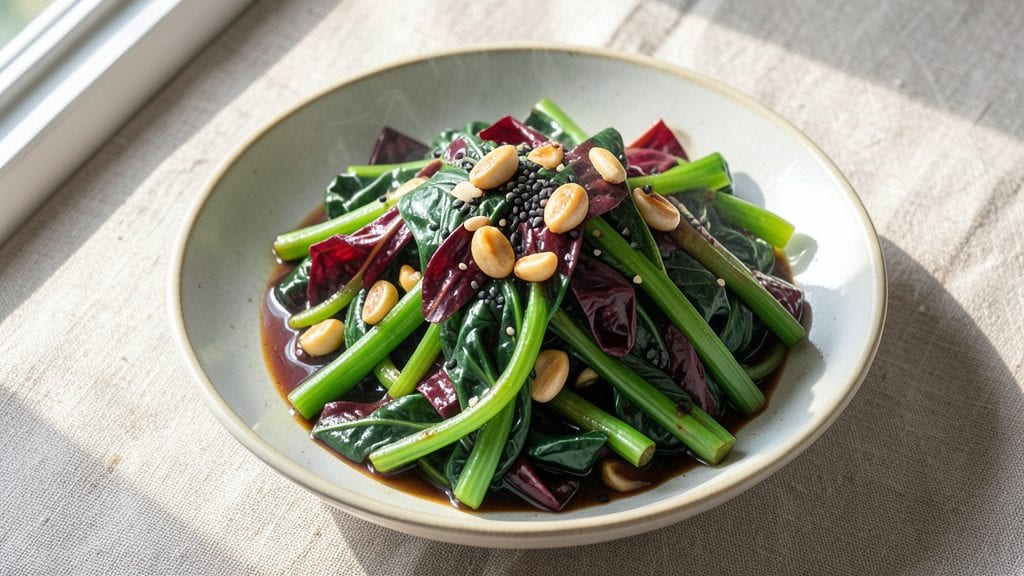
This Chinese red spinach recipe transforms humble gai lan into a vibrant, garlicky masterpiece with a signature wok-hei flavor. The secret lies in quick blanching followed by high-heat stir-frying, which preserves the bright green color while developing deep umami notes from garlic, soy, and oyster sauce.
I first discovered this technique at a local dim sum spot, where the chef demonstrated how proper timing creates that perfect crisp-tender texture.
The process begins with blanching the spinach to soften it just enough for quick cooking, then finishes with a garlicky soy glaze that coats each leaf. This method delivers restaurant-quality results in under 15 minutes using simple ingredients you likely already have on hand.
The key to success is maintaining high heat throughout the stir-fry to achieve that coveted wok-hei aroma.
By the time you're done, you'll have a dish that's bright green, tender-crisp, and packed with savory-sweet flavors from the soy glaze. The garlic and chili paste add just enough heat to balance the richness, while the oyster sauce contributes that signature umami depth.
This is the kind of home-cooked dish that rivals takeout but costs a fraction of the price.
The beauty of this recipe is its versatility—serve it as an appetizer, side dish, or even a light main course with steamed rice. The technique works equally well with regular spinach if gai lan isn't available, though the texture and flavor will differ slightly.
Let's get cooking with this authentic Chinese classic.
Ingredients for chinese red spinach
Pantry staples meet Chinese wok magic for this vibrant gai lan dish.
| Ingredient | Amount | Notes |
|---|---|---|
| Gai Lan (Chinese Red Spinach) 🥬 | 1 lb | Baby stalks preferred, bright green |
| Garlic Cloves 🧄 | 6 cloves | Fresh, minced for glaze |
| Light Soy Sauce 🥢 | ¼ cup | Kikkoman preferred |
| Dark Soy Sauce 🥢 | 1 tbsp | For color depth |
| Oyster Sauce 🦪 | 2 tbsp | Lee Kum Kee brand recommended |
| Sesame Oil 🥜 | 1 tsp | Toasted, for aroma |
| Chili Paste 🌶️ | 1 tbsp | Sichuan or Thai preferred |
| Sugar 🍯 | 1 tsp | Granulated or brown |
| Neutral Oil 🫒 | 2 tbsp | Vegetable or peanut oil |
| Green Onions 🧅 | 3 whole | Thinly sliced, for garnish |
| Salt 🧂 | ½ tsp | Kosher or sea salt |
| White Pepper 🌶️ | ¼ tsp | Freshly ground preferred |
| Rice Vinegar 🍶 | 1 tbsp | For brightness |
Gai lan is the star here. Look for baby stalks with bright green leaves—they're more tender and hold their color better during cooking. Most Asian markets carry it fresh, but if you can't find it, regular spinach works in a pinch. The stalks should snap easily when bent, not feel woody. For the best flavor, buy it the day you cook—it wilts quickly. If you're using regular spinach, blanch it for 30 seconds less than gai lan to prevent overcooking. The garlic should be fresh—no pre-minced jars here. For the soy sauces, Kikkoman for light and Lee Kum Kee for oyster are the gold standards, but any quality brands work.
No gai lan? Baby bok choy or regular spinach will do, though texture and flavor differ slightly. Short on oyster sauce? Substitute with 1 tbsp extra soy sauce plus 1 tsp fish sauce for umami depth. The chili paste adds heat—reduce to 0.5 tbsp if you prefer mild. For the sesame oil, use the toasted kind—it's more aromatic. The sugar balances the acidity, but honey or maple syrup work too. If you're making this for a crowd, double the glaze ingredients—it disappears fast. The green onions add freshness, but cilantro or chives would work just as well.
Blanched gai lan keeps for 2 days in the fridge, but it's best used immediately. The glaze ingredients stay fresh for 6 months in the pantry. For meal prep, store components separately—blanch the spinach, make the glaze, and combine when ready to serve. This dish reheats beautifully—just toss with a splash of water and stir-fry again over high heat. Leftovers taste even better the next day as the flavors meld. Portion into containers with a drizzle of sesame oil for easy grab-and-go lunches.
Why You'll Love This Recipe
- One-Pan Magic: I swear by this recipe—just toss gai lan, minced garlic, and a splash of dark soy sauce in one pan. No chopping boards to clean, no extra pots, just that perfect wok hei flavor in 15 minutes flat.
- Umami Bomb: That combo of light and dark soy sauce with oyster sauce? It’s like a flavor explosion in your mouth. The garlic caramelizes just enough to give it this addictive, savory depth that makes you want to eat it straight from the pan.
- Leftover Hero: Between us, this dish tastes even better the second day. I make a big batch on Sundays, and it’s my go-to for quick lunches or as a side for takeout—just reheat and serve. The gai lan holds up perfectly, no wilting in sight.
- Budget Stunner: Gai lan is cheap, and this recipe stretches a little goes a long way. A single bunch feeds four, and the pantry staples (soy sauces, oyster sauce) last forever. Honestly, it’s my secret weapon for feeding the family without breaking the bank.
Step-by-step instructions for wok-seared Chinese red spinach
Transform fresh gai lan into vibrant, garlicky bites with this foolproof wok technique.
Prepare the Garlicky Soy Glaze
In a small bowl, combine the 0.25 cup light soy sauce, 1 tablespoon dark soy sauce, 2 tablespoons oyster sauce, 1 tablespoon chili paste, 1 teaspoon sugar, and 1 tablespoon rice vinegar. Whisk vigorously until the sugar fully dissolves and the mixture becomes smooth and glossy. This glaze should coat the back of a spoon—if it's too thick, add 1 teaspoon water to loosen it.
In a separate small bowl, mince the 6 cloves garlic cloves into a fine paste using the flat side of your knife. Add the minced garlic to the soy mixture and stir well. Let the glaze sit for 5 minutes while you prepare the gai lan—this allows the garlic to infuse fully and develop its aromatic oils. The dark soy sauce will give your dish that signature deep mahogany color while balancing the brightness from the rice vinegar.
Blanch and Shock the Gai Lan
Fill a large pot with 4 quarts water and bring to a rolling boil over high heat. Add the 0.5 teaspoon salt to the boiling water. Working in batches if needed, blanch the 1 pound gai lan for 1 minute and 30 seconds—you want the stalks to soften slightly but remain vibrant green. Use tongs to transfer the blanched gai lan immediately to a large bowl filled with ice water for 1 minute to stop the cooking process and preserve its bright color.
Drain the gai lan thoroughly and pat it dry with paper towels. The key here is complete dryness—any moisture will prevent proper searing in the wok. If you're working with particularly wet leaves, spread them on a clean kitchen towel and press gently to remove excess water. The gai lan should be dry enough that it rustles slightly when you shake the bowl.
Wok-Sear the Gai Lan to Perfection
Heat a wok or large skillet over high heat until it's smoking hot. Add the 2 tablespoons neutral oil and swirl to coat the surface. Working quickly, add the dried gai lan in a single layer and stir-fry for 2 minutes. The high heat will cause the edges to blister and turn bright green—this is what we're aiming for. Don't overcrowd the wok or the spinach will steam instead of sear.
After 2 minutes, pour the prepared garlicky soy glaze evenly over the gai lan. Toss vigorously for 1 minute until the leaves are fully coated and the glaze has reduced slightly. The gai lan should be wilted but still retain its vibrant color. If the glaze appears too thick, add 1 tablespoon water to help it cling to the leaves. The chili paste will add subtle heat while the sesame oil infuses its nutty aroma into the dish.
Finish with Green Onions and Season
Remove the wok from heat and immediately add the 3 whole green onions, sliced thinly on the bias. Toss everything together for 30 seconds to distribute the green onions evenly. Sprinkle with the 0.25 teaspoon white pepper and give one final toss. The white pepper adds depth without overpowering the dish's delicate flavors.
Taste and adjust seasoning if needed—you may want to add a splash more light soy sauce for saltiness or a touch of rice vinegar for brightness. The dish should be perfectly balanced between sweet, salty, umami, and a hint of heat. Serve immediately while the gai lan is still vibrant and the glaze is glossy. This dish is best enjoyed fresh from the wok when the textures are at their peak.
Pro Tips For Making Chinese Red Spinach
- Cut Gai Lan at Angles: Those thick stems won’t soften properly if you slice them straight across—cut them diagonally into 2-inch chunks. The larger surface area cooks faster and looks more restaurant-worthy. (Yes, it’s worth the extra 30 seconds of prep.)
- Blister Garlic First: I used to mince garlic raw, but now I toast whole cloves in oil until they’re golden and fragrant—about 2 minutes on medium heat. Smash them in the pan instead of mincing, and the flavor jumps off the plate. (Skip this, and you’ll miss the depth.)
- Toss Spinach in Sauce Twice: After the first stir, let the gai lan sit for 30 seconds—it’ll wilt fast. Then toss again with the sauce. This guarantees even coating and prevents dry spots. (I learned this after serving a plate where half was under-seasoned.)
- Finish with Dark Soy: Add dark soy sauce last—just a teaspoon—after the gai lan is tender. It’ll give the dish that glossy, restaurant-style sheen without overpowering the lighter flavors. (Save it for the end, or you’ll regret the muddy color.)
Storing and reheating this recipe
Blanched Spinach Storage
Store blanched gai lan in an airtight container with a damp paper towel to maintain moisture. It keeps in the fridge for up to 2 days—though I recommend using it within 12 hours for peak texture.
The blanching process softens the stalks, so they won’t hold up as well after 24 hours. If storing longer, freeze the blanched spinach in a single layer on a tray before transferring to a bag—this prevents clumping. 🥬
Glaze Prep Ahead
Make the garlicky soy glaze up to 3 days in advance and store it in a small airtight container in the fridge. The flavors deepen over time, especially the garlic and chili notes.
When ready to use, give it a quick whisk and adjust seasoning—you might need an extra ½ teaspoon soy sauce or dash of vinegar after refrigeration. The glaze also freezes well for up to 3 months, though texture may slightly separate upon thawing. 🧄
Reheating for Wok-Hei
To revive the dish, toss the stored gai lan with 1 teaspoon neutral oil and reheat in a wok or skillet over high heat for 2-3 minutes. Add 1 tablespoon fresh glaze (or a splash of soy sauce + water) and toss until heated through.
The key is high heat—this mimics the original wok-searing and restores that signature wok-hei aroma. If using frozen spinach, thaw first and pat very dry before reheating. ⚡
Portioning for Meal Prep
Divide the cooked gai lan into single-serving containers with a drizzle of sesame oil (about ½ teaspoon per portion) to prevent sticking. Store the glaze separately in a small jar—reheat it in the microwave for 20 seconds before tossing with the spinach.
This keeps the dish vibrant and flavorful for up to 3 days. For extra freshness, add thinly sliced green onions just before serving. 🍶
Freezing the Full Dish
If you must freeze the complete dish, spread it on a tray to solidify, then transfer to a freezer bag with all air removed. Thaw overnight in the fridge, then reheat using the wok method above.
The texture will be slightly softer after freezing, but the flavors remain rich. For best results, avoid freezing—this dish shines fresh from the wok! ❄️
Nutrition facts
Frequently asked questions
What makes gai lan different from regular spinach?
Gai lan (Chinese red spinach) has thicker, more tender stalks and a slightly sweeter, more delicate flavor than regular spinach. The leaves also stay vibrant green when cooked properly, while regular spinach tends to wilt more dramatically. The stalks are edible and add satisfying texture when stir-fried.
Can I substitute gai lan with another vegetable?
Yes! Baby bok choy or regular spinach work in a pinch, though the texture will differ. For bok choy, use 1 head (about 12 oz) and reduce blanching time by 30 seconds. Regular spinach should be blanched for 1 minute instead of 1 minute 30 seconds to prevent overcooking. The flavor will be milder but still delicious.
Why does my gai lan turn gray or mushy?
Overcooking or improper blanching causes this. Always blanch gai lan for exactly 1 minute 30 seconds—no longer! Also ensure you shock it immediately in ice water to stop cooking. For stir-frying, keep heat at high and cook for only 2 minutes before adding the glaze. Overcrowding the wok also causes steaming instead of searing.
How do I get that smoky wok-hei flavor at home?
Use a carbon steel or cast iron wok heated until it's smoking hot before adding oil. Work quickly and keep the gai lan moving constantly. A high-heat gas stove works best, but electric stoves can achieve this with proper technique. Add a pinch of white pepper at the end for extra depth. The key is high heat + fast cooking.
Is this dish spicy? Can I make it milder?
The chili paste adds subtle heat, but you can easily adjust it. Reduce to 0.5 tbsp for mild heat or omit completely for a non-spicy version. The dish still delivers rich umami flavors from the soy and oyster sauces. For extra brightness, add 1 extra tbsp rice vinegar to balance any remaining spice.