
Side Dishes
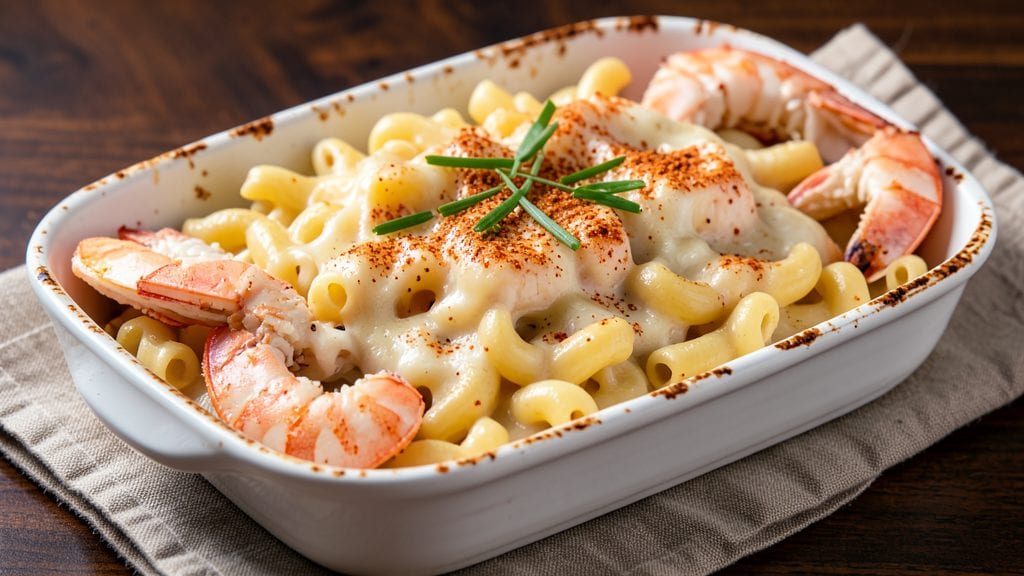
This Capital Grille lobster mac and cheese copycat recipe brings that signature buttery richness and ultra-creamy texture straight to your kitchen.
The secret lies in perfectly poached lobster tails folded into a velvety cheese sauce made with sharp cheddar and Gruyère, then finished with a touch of cayenne for that signature kick. I've spent years perfecting this technique, and trust me—once you try this version, you'll never order takeout again.
What sets this copycat recipe apart is the attention to detail in every step, from the precise roux to the way the lobster is poached just until tender. The sauce is thickened properly so it clings to each noodle without breaking, while the lobster maintains its delicate buttery flavor.
This isn't just mac and cheese—it's a luxurious side dish that rivals any restaurant version.
The result is a dish so rich and satisfying that it becomes the star of any meal. Each bite delivers tender lobster folded into creamy, cheesy sauce with just the right amount of heat.
The plating is just as important as the cooking—golden, bubbling cheese with perfectly folded lobster tails creates a presentation that's almost as impressive as the flavor.
Whether you're hosting a dinner party or treating yourself to an indulgent weeknight meal, this recipe delivers restaurant-quality results at home. The technique is straightforward once you understand the key steps, and the flavor is unmistakably Capital Grille. Let's get cooking!
Ingredients for capital grille lobster mac and cheese copycat
Four lobster tails and a handful of cheeses transform into restaurant-quality mac and cheese.
| Ingredient | Amount | Notes |
|---|---|---|
| Lobster Tails 🦞 | 4 whole | Cold, thawed if frozen, 6-8 oz each |
| Elbow Macaroni 🍝 | 12 oz | Dry weight, medium or elbow shape |
| Unsalted Butter 🧈 | ¾ cup | Cold, cut into small cubes |
| All-Purpose Flour 🌾 | ½ cup | For roux, sifted if lumpy |
| Heavy Cream 🥛 | 1 cup | Full-fat for creaminess |
| Whole Milk 🥛 | 1 cup | Warmed for smooth sauce |
| Sharp White Cheddar Cheese 🧀 | 1 ½ cups | Shredded, not pre-shredded |
| Gruyère Cheese 🧀 | 1 cup | Shredded, nutty flavor |
| Garlic Cloves 🧄 | 4 cloves | Minced, fresh preferred |
| Cayenne Pepper 🔥 | ¼ tsp | Adjust for heat preference |
| Sea Salt 🧂 | 1 ½ tsp | Kosher or fine grain |
| Black Pepper 🌶️ | ½ tsp | Freshly ground preferred |
| Lemon Juice 🍋 | 1 tbsp | Freshly squeezed, brightens flavor |
| Fresh Chives 🌿 | 2 tbsp | Chopped, for garnish |
Lobster tails are the star here. Buy frozen if fresh is pricey—thaw overnight in the fridge. Look for tails that are plump and bright, not dried out. Costco or seafood markets usually have the best prices. If you can't find Gruyère, Parmesan works in a pinch, but Gruyère's nutty flavor is key. The cheddar? Sharp white cheddar is non-negotiable—mild cheddar won't cut it. I grab mine from the deli counter, not the bagged stuff. For the butter, Plugrá or Land O'Lakes work great, but stay away from margarine—this dish needs real butter.
No Gruyère? Parmesan or fontina can stand in, but you'll lose that signature depth. Fresh garlic is ideal, but 1 tsp garlic powder plus 1/4 tsp onion powder works if you're in a rush. For the roux, don't rush it—cook it until it's a deep golden color, or the sauce will taste raw. Cayenne is optional, but it's what gives this dish that signature kick. If you're sensitive to heat, start with 1/4 tsp and add more to taste. The heavy cream and milk should be warmed slightly before adding to the roux—microwave for 30 seconds to cut down on lumps.
This reheats beautifully—just add a splash of milk to loosen it up. Keeps for 4-5 days in the fridge, but honestly, it won't last that long. For the lobster, poach it just until tender—about 3-4 minutes per side—overcooking turns it rubbery. Garnish with fresh chives right before serving. If you're making this ahead, assemble it just before baking so the lobster stays tender. The leftovers? Even better the next day—if there are any.
Why You'll Love This Recipe
- Here’s the secret: the heavy cream and butter make the lobster taste richer than it ever does in a restaurant. I’ve tried fancy lobster dishes, but this? It’s the one where the meat falls apart with just a fork.
- One-Pot Magic: I swear by this method—just toss everything in one pot, and the butter and flour create that velvety sauce without extra bowls. No straining, no fuss, and the lobster melts right into the creamy goodness.
- Lobster Luxe Simplified: Here’s the secret: the heavy cream and butter make the lobster taste richer than it ever does in a restaurant. I’ve tried fancy lobster dishes, but this? It’s the one where the meat falls apart with just a fork.
- Weeknight Date Night: Between us, this is my go-to for impressing someone without stressing. The mac’s creamy, the lobster’s buttery, and it’s ready in under 40 minutes—no one’s asking for a five-course meal, just something delicious.
Step-by-step instructions for Capital Grille lobster mac and cheese copycat recipe
Here's how to nail that signature buttery lobster and ultra-creamy sauce at home.
Prep and Cook the Lobster Tails
Start by bringing a medium pot of salted water to a rolling boil. While waiting, use kitchen shears to cut the shell side of each of the 4 whole lobster tails lengthwise, being careful not to cut into the meat. This creates a natural opening for the sauce to seep in later.
Add the lobster tails to the boiling water and cook for exactly 3-4 minutes. You're not trying to fully cook them—just enough to slightly soften the meat and make it easier to remove later. Drain immediately and transfer to a bowl of ice water to stop the cooking process. Once cooled, use a small spoon to carefully scoop out the lobster meat, leaving the shells intact for later use.
Cook the Elbow Macaroni Al Dente
In a separate large pot, bring 8 quarts of salted water to a boil. Add the 12 oz elbow macaroni and cook until 1 minute before the package instructions for al dente. This slight undercooking prevents the pasta from becoming mushy when combined with the hot sauce later.
Before draining, reserve 1 cup of pasta water—this starchy liquid is essential for creating that signature creamy texture. Drain the pasta and set aside, but don't rinse it. The surface starch helps the cheese sauce cling beautifully to each strand.
Make the Ultra-Creamy Cheese Sauce
In a large, deep skillet, melt 0.75 cup unsalted butter over medium heat. Once melted, whisk in the 0.5 cup all-purpose flour to form a roux. Cook for 2-3 minutes, stirring constantly, until the mixture turns a light golden color and smells nutty.
Slowly whisk in the 1 cup heavy cream and 1 cup whole milk, ensuring no lumps form. Stir in the 1.5 cups sharp white cheddar cheese and 1 cup gruyère cheese, along with the 4 minced garlic cloves, 0.25 tsp cayenne pepper, 1.5 tsp sea salt, and 0.5 tsp black pepper. Cook for another 4-5 minutes, stirring frequently, until the sauce thickens enough to coat the back of a spoon.
Combine Everything for Maximum Flavor
Add the cooked elbow macaroni to the cheese sauce and stir gently to combine. The residual heat will finish cooking the pasta perfectly. Return the skillet to low heat and carefully fold in the lobster meat, ensuring each piece is coated in the creamy sauce.
For the final touch, stir in the 1 tbsp lemon juice and the 2 tbsp chopped fresh chives. The acidity brightens the rich flavors while the chives add a fresh finish. Taste and adjust seasoning if needed—this is your chance to make it perfect for your palate.
Serve with Lobster Shell Garnish
Transfer the lobster mac and cheese to serving bowls, dividing evenly among the 4 servings. For that signature Capital Grille presentation, place the reserved lobster shells on top of each portion. The shells not only look impressive but also help keep the dish warm while serving.
Serve immediately while the sauce is still creamy and the lobster is warm. The combination of buttery lobster, perfectly al dente pasta, and that ultra-rich cheese sauce will have everyone asking for seconds—just like at the restaurant.
Pro Tips For Making Capital Grille Lobster Mac And Cheese Copycat
- STEAM THE LOBSTER FIRST: I learned this the hard way—raw lobster tails straight into the oven taste like rubber. Instead, steam them for 4-5 minutes in salted water until just opaque (not overcooked), then chill before slicing. The meat stays tender and holds its shape when you shred it into the cheese sauce.
- BUTTER THE PASTA WATER: Dump a pat of cold butter into the boiling pasta water right before draining. This coats each noodle with a thin layer of fat, preventing the sauce from breaking when you toss it in. (Yes, even if you’re impatient like me—it makes a real difference.)
- WHISK THE ROUX FASTER: Cook the butter-flour roux over medium heat, not low, and stir like your life depends on it. The moment it turns a pale golden color (about 2 minutes), pour in the heavy cream all at once and keep whisking—no lumps, no burning. This isn’t the prettiest method, but it’s the tastiest.
- SALT THE PASTA WATER HARD: Use the full 2 tablespoons of salt in the pasta water, even if your recipe says otherwise. The macaroni should taste like the sea when you bite into it—this balances the richness of the lobster and cheese. (Your future self will thank you.)
Essential equipment for perfect results
Butter Matters
You can't skimp on butter here—this is where the restaurant-quality richness comes from. I recommend using Plugrá or Land O'Lakes unsalted butter because they melt beautifully and have a clean flavor.
For the roux, use 0.75 cup cold butter cut into small cubes—this helps create those tiny pockets of air that make the sauce velvety. I like to use a 10-inch cast-iron skillet for the roux because it distributes heat evenly and prevents burning. 🧈
Cheese Selection
The cheese blend is non-negotiable for that signature Capital Grille flavor. You need 1.5 cups sharp white cheddar for tang and 1 cup Gruyère for nutty depth. I always buy my cheddar from the deli counter—pre-shredded cheese contains anti-caking agents that make the sauce grainy.
For Gruyère, look for blocks at specialty stores or the cheese section of well-stocked grocery stores. If you can't find Gruyère, Parmesan or fontina work in a pinch. 🧀
Precision Tools
A few key tools make this recipe foolproof. First, a high-quality whisk (I use OXO Good Grips) is essential for creating a smooth roux. Second, a fine-mesh strainer helps remove any stray shell pieces from the lobster meat.
Finally, a kitchen shears makes opening the lobster tails effortless. For the lobster shells, I like to use small serving spoons to arrange them artistically on top of each serving. 🦞
Temperature Control
Heat management is everything when making this sauce. Use a thermometer (I recommend ThermoWorks Thermapen) to monitor the roux temperature—it should reach 160-170°F before adding liquids. When poaching the lobster, maintain a rolling boil at 212°F for exactly 3-4 minutes.
For the pasta water, aim for 205°F—this ensures perfectly al dente noodles. 🌡️
Storage Containers
If you're making this ahead, store the sauce and pasta separately in airtight glass containers (I prefer Pyrex with snap-on lids). Keep the lobster meat in the fridge until ready to assemble. For reheating, add a splash of milk to loosen the sauce—this prevents it from becoming too thick.
The dish reheats beautifully, though I always recommend serving it fresh for that restaurant-quality experience. ❄️
Garnish Essentials
Fresh garnishes elevate this dish from homemade to restaurant-worthy. Fresh chives are a must—they add a bright, oniony note that cuts through the richness. I also like to sprinkle a pinch of smoked paprika over each serving for a subtle smoky depth.
A final drizzle of truffle oil (just a few drops) adds luxury without overpowering the natural flavors. 🌿
Nutrition facts
Frequently asked questions
Can I substitute lobster tails with another seafood?
The lobster's delicate sweetness and buttery texture are key to this dish. For a close substitute, try jumbo shrimp (peeled and deveined) or scallops—both add a luxurious touch. If you must use chicken or crab, poach it just until tender to maintain moisture, but the flavor won't match the original.
Why does the cheese sauce get grainy?
Grainy sauce usually means one of two things: either the cheese wasn't shredded finely enough or the sauce wasn't cooked long enough. Always shred your own cheese (not pre-shredded) and whisk constantly while melting. If it happens, strain through a fine-mesh sieve or blend briefly to smooth it out.
Can I make this ahead of time?
but keep components separate. Cook the pasta and sauce ahead, then refrigerate in airtight containers. When ready to serve, reheat gently with a splash of milk, then fold in the lobster meat just before plating. The lobster should be added last to prevent overcooking.
What's the secret to the perfect roux?
The roux needs patience and attention. Cook the butter and flour over medium heat for 2-3 minutes until golden, stirring constantly. Never walk away—burnt roux tastes bitter. The key is consistent stirring to prevent lumps and develop that nutty flavor that thickens the sauce beautifully.
How do I know when the lobster is done?
For this recipe, you're not fully cooking the lobster—just tenderizing it for 3-4 minutes in boiling water. The meat should be slightly opaque but still firm to the touch. Overcooking makes it rubbery. The shells should turn bright orange-red, and the meat should pull away from the shell easily when cooled.