
Main Courses
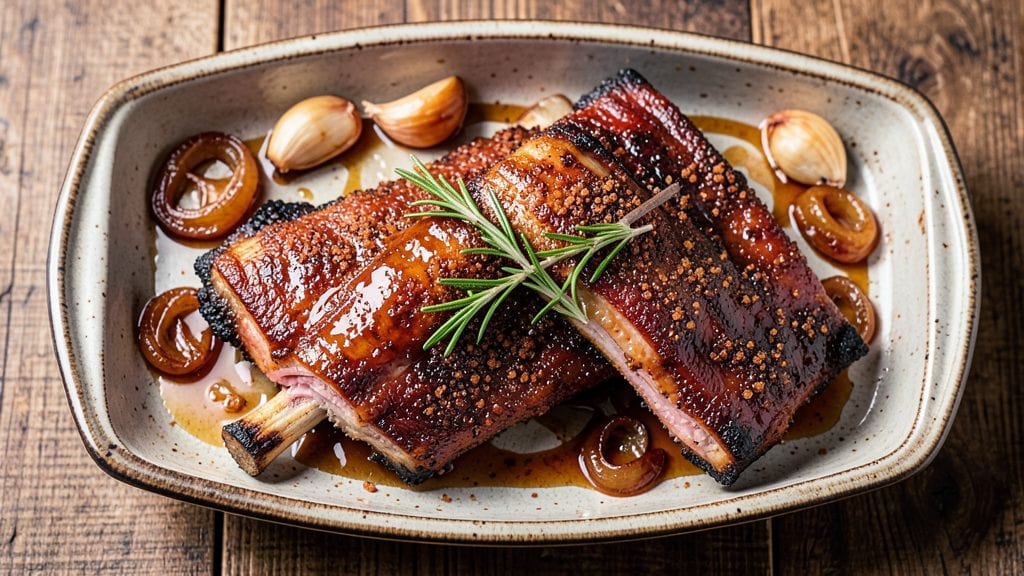
Mastering baked St. Louis-style ribs delivers that perfect balance of crispy bark and fall-off-the-bone tenderness—a technique I’ve perfected over years of slow-cooked experiments. The secret lies in a precise dry rub, oven baking for even heat, and a final sauce glaze that locks in moisture while adding depth.
This method transforms tough cuts into melt-in-your-mouth perfection without requiring a smoker or grill.
What sets St. Louis ribs apart is the 3-2-1 method: three hours of dry rub, two hours of baking wrapped in foil, and one hour unwrapped to form that coveted crust.
I use a blend of brown sugar, paprika, and garlic powder for the rub, which caramelizes into a glossy bark while keeping the meat tender. The sauce—a mix of ketchup, vinegar, and spices—adds a tangy finish without overpowering the natural flavor.
By the time you pull these ribs from the oven, you’ll have a crispy, caramelized exterior that shatters at the touch and juicy, tender meat that falls apart with minimal effort.
The aroma alone will have everyone gathering around the table, and the sauce ties it all together with a perfect balance of sweet and smoky. This is the kind of dish that turns a simple dinner into a showstopper.
Serve with classic sides like coleslaw, baked beans, or cornbread to complete the meal. The ribs hold well for leftovers, making them ideal for meal prep or feeding a crowd. Let’s get started on creating ribs that taste like they came from a St. Louis BBQ joint.
Ingredients for baked st louis ribs
Four pounds of ribs plus a handful of pantry staples—this is your shortcut to St. Louis-style perfection.
| Ingredient | Amount | Notes |
|---|---|---|
| St. Louis-Style Ribs 🍖 | 4 lb | Bone-in, meaty ends included |
| Brown Sugar 🍚 | ½ cup | Light or dark variety |
| Smoked Paprika 🌶️ | 2 tbsp | For deep smoky flavor |
| Garlic Powder 🧄 | 1 tbsp | Freshly ground preferred |
| Onion Powder 🧅 | 1 tbsp | For sweet depth |
| Ground Black Pepper 🌶️ | 1 tbsp | Freshly cracked |
| Kosher Salt 🧂 | 1 tbsp | Diamond Crystal preferred |
| Ground Cumin 🌿 | 1 tsp | Toasted for warmth |
| Mustard Powder 🌶️ | 1 tsp | For tangy kick |
| Ketchup 🍅 | ½ cup | Heinz preferred |
| Apple Cider Vinegar 🍎 | ¼ cup | For tangy balance |
| Worcestershire Sauce 🍯 | 1 tbsp | For umami depth |
| Honey 🍯 | 1 tbsp | Wildflower preferred |
| Aluminum Foil 📄 | 1 sheet | Heavy-duty for wrapping |
The ribs are the star, so don’t cheap out. Costco or Whole Foods sell the best cuts with meaty ends—those little nubs of meat are where all the flavor hides. Look for bright red, marbled meat with a glossy sheen (not dried out). If you can’t find St. Louis-style ribs, baby back ribs work in a pinch, but they’re smaller and cook faster. The brown sugar is non-negotiable—it’s what creates that caramelized bark. Muscovado sugar adds molasses notes if you want to get fancy, but regular light brown sugar does the job perfectly.
No smoked paprika? Regular paprika plus a pinch of liquid smoke gets you close. Short on ketchup? Tomato paste plus a splash of vinegar works, but the sweetness won’t be as balanced. The Worcestershire sauce can be swapped for soy sauce or fish sauce if you’re avoiding it, but trust me on this—it’s the umami glue. For the rub, I always toast the spices in a dry pan for 30 seconds first (just until fragrant)—worth the extra minute for deeper flavor. And if you’re making this ahead, prep the dry rub and sauce the day before so everything’s ready to go.
These ribs reheat like a dream—450°F for 10-15 minutes wrapped in foil brings them back to life. Store leftovers in the fridge for 4 days or freeze for 3 months. The sauce thickens when chilled, so thin it with a splash of water before reheating. I always make double batches because the second day is even better—the bark gets more intense and the meat stays juicy. Portion into individual containers for easy meal prep, and save the extra sauce for brisket or chicken wings.
Why You'll Love This Recipe
- One-Pan Magic: I swear by this—just ribs, brown sugar, and those warm spices (smoked paprika, garlic powder) tossed on a sheet pan. No messy sauces, no extra bowls, and the oven does all the work while I sip my coffee.
- Sweet-Smoky Bomb: That caramelized brown sugar crust? It’s the star. The smoked paprika gives it this deep, almost smoky warmth, but the garlic and onion powders keep it bright and familiar—like a hug from your favorite BBQ joint, but way easier.
- Leftovers That Don’t Suck: Honestly, I make these on Sundays because the ribs stay tender for days. Wrap them in foil, reheat with a splash of water, and they taste just as good cold in sandwiches—no sad, dry meat here.
- Budget BBQ Win: St. Louis-style ribs are cheaper than you’d think, and this recipe stretches them far. A single rack feeds four, and the spices cost pennies. Plus, the sweet glaze makes even a simple side (like baked beans) feel like a feast.
Step-by-step instructions for baked St louis style ribs
Here's how to bake those fall-off-the-bone ribs with a perfect crispy bark—no smoker needed.
Prepare the Dry Rub for Maximum Flavor
In a medium bowl, combine the 0.5 cup brown sugar, 2 tablespoons smoked paprika, 1 tablespoon garlic powder, 1 tablespoon onion powder, 1 tablespoon ground black pepper, 1 tablespoon kosher salt, 1 teaspoon ground cumin, and 1 teaspoon mustard powder. Mix well with your hands or a whisk until the spices are evenly distributed and the brown sugar is fully incorporated.
This dry rub is the secret to that signature St. Louis sweet-and-smoky flavor. I like to rub it generously over the 4 lb St. Louis-style ribs—both the meaty sides and the bone side—so every bite gets that perfect balance of sweetness and spice. Let the ribs sit at room temperature for 15 minutes before baking to help the rub stick better and ensure even cooking.
Build the Sauce for Tangy Depth
In a separate bowl, whisk together the 0.5 cup ketchup, 0.25 cup apple cider vinegar, 1 tablespoon Worcestershire sauce, and 1 tablespoon honey. This sauce adds a tangy, slightly sweet contrast to the smoky rub. The vinegar cuts through the richness of the ribs, while the honey and ketchup give it that classic St. Louis sticky glaze.
Once mixed, pour the sauce into a small saucepan and simmer over medium-low heat for 5 minutes until it thickens slightly. You want it to coat the back of a spoon but still be pourable. This step ensures the sauce clings perfectly to the ribs during baking, creating that signature sticky bark.
Bake the Ribs Low and Slow for Tenderness
Preheat your oven to 275°F—this low temperature is key for tenderizing the meat without drying it out. Place the rubbed ribs on a large sheet of aluminum foil, bone-side down, and pour the sauce evenly over the top. Tightly wrap the ribs in the foil, sealing all edges to trap steam and moisture.
Bake for 2.5 hours at 275°F. After this time, the ribs should be fork-tender, with the meat pulling away from the bone easily. If you press gently on the meat with a spoon, it should feel soft and almost jelly-like. This is the moment that matters: patience pays off with melt-in-your-mouth tenderness.
Unwrap and Broil for Crispy Bark
Remove the ribs from the oven and carefully unwrap the foil. Place them back on the baking sheet, bone-side down, and transfer to the top rack of the oven. Increase the heat to broil and cook for 5-7 minutes until the sauce darkens and forms a glossy, slightly crispy bark.
Watch closely during this step—you want that bark to be deep mahogany brown but not burned. The high heat finishes the sauce and creates the perfect contrast between the tender meat and crispy exterior. Let the ribs rest for 10 minutes before serving, tented loosely with foil, to allow the juices to redistribute.
Serve with the Sticky Glaze
Slice the ribs between the bones with kitchen shears or a sharp knife, then arrange them on a platter. Spoon any remaining sauce from the baking sheet over the top for extra stickiness. The ribs should be glistening, with a perfect balance of sweet, smoky, and tangy flavors in every bite.
Serve immediately with your favorite sides—crusty bread to soak up the sauce, coleslaw for crunch, or baked beans for a classic BBQ spread. The contrast of textures and temperatures makes this dish unforgettable. Trust the process, and you'll have ribs that rival any competition-worthy smoker recipe!
Pro Tips For Making Baked St Louis Ribs
- Trim the Fat First: St. Louis ribs come with a thick fat cap—leave it on, but score it in a crosshatch pattern before baking. This lets the brown sugar glaze penetrate deeper and prevents soggy spots where the fat would otherwise steam the meat.
- Don’t Skip the Dry Brine: Pat the ribs bone-dry with paper towels, then sprinkle half your garlic and onion powder right before baking. The salt pulls out moisture, and the dry spices toast into a crust instead of dissolving into a wet paste.
- Start Hot, Then Chill: Bake at 425°F for the first 20 minutes—this caramelizes the brown sugar fast. After that, drop to 300°F and cover loosely with foil. I learned this the hard way: skipping the high-heat start means a sticky, undercooked mess.
- Glaze in Stages: Brush on half the brown sugar mixture after the first hour, not all at once. The ribs release juices that dilute the glaze if you dump it on early, and you’ll end up with a sad, watery coating instead of that glossy, sticky crust.
Essential equipment for great baked st louis ribs
Oven Thermometer
An oven thermometer is non-negotiable for St. Louis ribs—your oven’s temperature gauge is often off by 25-50°F. I use the Thermoworks Oven Thermometer because it’s precise and hangs easily from the oven rack.
Place it in the oven while preheating to confirm the actual temperature. For 275°F baking, aim for 275°F ±5°F—any higher risks drying out the ribs. 🌡️
Heavy-Duty Aluminum Foil
Use double-thick heavy-duty aluminum foil (like Reynolds Wrap Heavy Duty) to wrap your ribs during the slow bake. Single-layer foil tears easily and won’t trap steam effectively. Crimp the edges tightly to create an airtight seal—this is what turns tough meat into tender perfection.
I fold the foil over twice on each side to lock in moisture.
Meat Thermometer
A digital instant-read thermometer (I recommend ThermoWorks Smoke) is essential for checking internal temperature. The ribs are done when they reach 195-203°F—probe the thickest part of the meat, avoiding bone. For St. Louis ribs, this method ensures they’re fork-tender without overcooking. No guessing—just precision. ⚡
Baking Sheets
Invest in two heavy-duty baking sheets (like All-Clad Stainless Steel)—one for the initial bake and one for broiling. The stainless steel conducts heat evenly and prevents warping.
Place a wire rack on the sheet to allow air circulation, which helps the bark crisp up better during broiling. Avoid dark-colored sheets—they can cause uneven cooking.
Kitchen Shears
For slicing ribs between the bones, sharp kitchen shears (like Mercer Culinary Genius) are a game-changer. They cut cleanly through cartilage and bone without crushing the meat.
A slicing knife works too, but shears are faster and safer for this job. Always slice against the grain for maximum tenderness. 💪
Saucepan for Thickening
A small stainless-steel saucepan (like All-Clad 2-quart) is perfect for simmering the sauce to the right consistency. The sauce needs to thicken just enough to cling to the ribs but still be pourable.
Avoid nonstick pans—they can alter the sauce’s flavor and texture. Keep the heat at medium-low to prevent burning. 🍲
Nutrition facts
Frequently asked questions
Why do St. Louis-style ribs need the 3-2-1 method?
The 3-2-1 method creates the perfect balance of tenderness and bark. The 3-hour dry rub lets spices penetrate deeply, the 2-hour wrapped bake breaks down collagen for melt-in-your-mouth texture, and the 1-hour unwrapped broil forms that signature crispy crust. Skipping any step risks dry meat or weak flavor.
Can I substitute baby back ribs for St. Louis-style ribs?
Yes, but expect smaller portions and faster cooking times—baby backs are leaner and cook about 1-1.5 hours less. Use the same method, but reduce the wrapped bake to 1.5-2 hours and broil for 3-5 minutes. The flavor profile works, but the meat-to-bone ratio differs.
What if my ribs aren't tender enough after baking?
Ribs need to reach 195-203°F internally. If they’re not tender, wrap them in fresh foil and bake at 275°F for another 30-45 minutes, adding a splash of water to the pan. Avoid overcooking—they’ll dry out. For extra moisture, brush with apple cider vinegar before rewrapping.
How do I store leftover ribs?
Store ribs in an airtight container with a damp paper towel to retain moisture. They keep for 4 days in the fridge or 3 months frozen. Reheat at 450°F for 10-15 minutes wrapped in foil—this restores tenderness without drying. The bark may soften slightly, but the meat stays juicy.
Can I make the dry rub ahead of time?
Store the dry rub in an airtight container for up to 2 weeks at room temperature. For best flavor, toast the spices fresh before use (30 seconds in a dry pan). The sauce can also be prepped 1 day ahead—just reheat and thin with water if needed. Prep saves time on cooking day!