
Main Courses
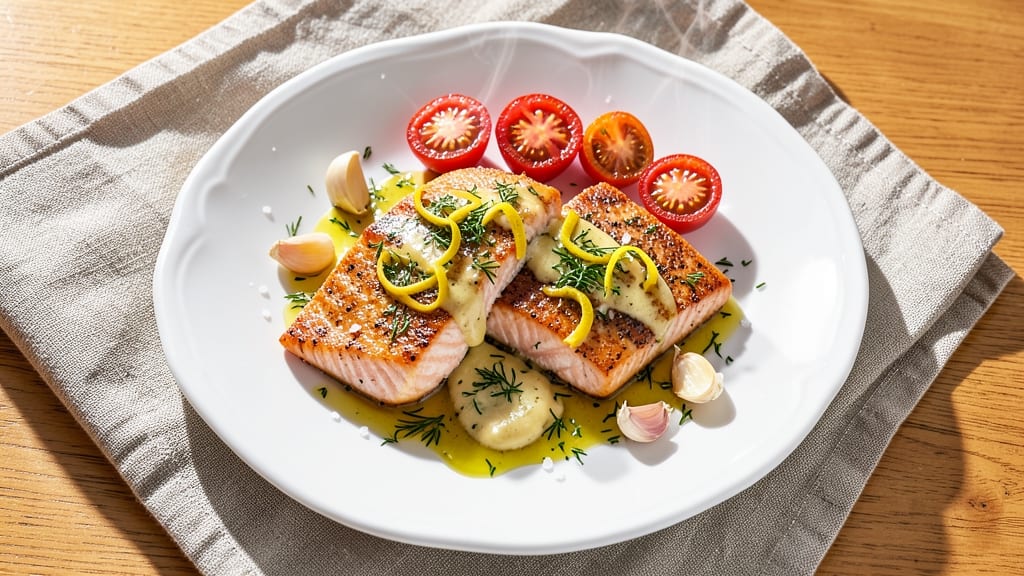
This Mediterranean-style baked salmon recipe delivers restaurant-quality results with a crispy golden skin and a fragrant lemon-garlic herb crust that transforms simple weeknight dinners into something special.
The secret lies in a precise balance of Mediterranean flavors—bright lemon zest, aromatic garlic, and fresh herbs—that infuse every bite while keeping the method straightforward enough for home cooks.
What sets this recipe apart is the foolproof technique for achieving that coveted crispy skin without frying, using just a hot oven and a light coating of olive oil.
The salmon bakes in 15 minutes, making it perfect for busy evenings, while the accompanying herbs and citrus create a vibrant, aromatic crust that pairs beautifully with Mediterranean sides like roasted vegetables or fluffy couscous.
The result is tender, flaky salmon with a crispy exterior that holds its shape perfectly, all while maintaining a moist, delicate interior. The lemon-garlic crust adds a bright, herby note that cuts through the richness of the fish, creating a dish that’s both elegant and effortless.
This recipe is designed to impress guests while still being simple enough for everyday meals.
Serve with a squeeze of fresh lemon and a sprinkle of chopped parsley for an extra burst of freshness. The combination of textures and flavors makes this baked salmon a standout centerpiece for any Mediterranean-inspired meal. Let’s get started on creating this perfect dish.
Ingredients for baked salmon mediterranean
Mediterranean flavors meet restaurant-quality technique in this crispy-skinned salmon recipe.
| Ingredient | Amount | Notes |
|---|---|---|
| Center-Cut Salmon Fillets 🐟 | 4 pieces | Skin-on, 6-8 oz each |
| Extra-Virgin Olive Oil 🫒 | 2 tbsp | Light Mediterranean variety |
| Fresh Lemon Zest 🍋 | 1 tbsp | From organic lemons |
| Fresh Lemon Juice 🍋 | 2 tbsp | From same lemons |
| Garlic Cloves 🧄 | 4 cloves | Minced, fresh preferred |
| Fresh Dill 🌿 | ¼ cup | Chopped, stems removed |
| Fresh Parsley 🌿 | ¼ cup | Chopped, Italian flat-leaf |
| Diamond Crystal Kosher Salt 🧂 | 1 tsp | Fine grain preferred |
| Freshly Ground Black Pepper 🌶️ | ½ tsp | Coarse grind |
| Dried Oregano 🍃 | ½ tsp | Mediterranean variety |
| Unsalted Butter 🧈 | 1 tbsp | Cold, for skin crisping |
| Red Wine Vinegar 🍷 | 1 tsp | For brightness |
The salmon selection is critical—center-cut fillets with skin ensure even cooking and that coveted crisp. Opt for wild-caught whenever possible, as it has firmer texture and richer flavor. Whole Foods Market or specialty seafood counters carry the best quality, but don't overlook your local fishmonger who can often provide fresher options than grocery chains. The skin should be intact and glistening, with no discoloration. For optimal results, purchase fillets the day you plan to cook and refrigerate uncovered for 15 minutes to remove surface moisture before seasoning. This step is non-negotiable for achieving that perfect crisp.
Substitutions should preserve the Mediterranean character. Swap fresh dill for 1 tsp dried dill, but reduce to one-third the amount since dried herbs are more concentrated. No fresh parsley? Cilantro works in a pinch, though it imparts a slightly different profile. The olive oil must be extra-virgin—California or Italian varieties from Trader Joe's or Whole Foods provide optimal flavor. For extra brightness, add 1 tsp capers to the crust mixture. The lemon zest and juice can be substituted with bottled lemon juice if needed, though fresh yields superior results. For those avoiding vinegar, substitute with an additional 1 tbsp lemon juice instead.
Proper preparation extends freshness and flavor. Store any unused fresh herbs wrapped in damp paper towels within an airtight container for up to 5 days in the refrigerator. The salmon fillets should be used immediately upon purchase for peak quality, but if storing, keep them on ice or in the coldest part of your fridge for no more than 24 hours. The herb mixture can be prepped 2 hours ahead and stored in an airtight container in the fridge. For leftovers, consume within 1 day as the texture changes significantly after that. This dish reheats poorly, so plan to serve immediately after baking.
Why You'll Love This Recipe
- Foolproof Timing: I swear by this—just 15 minutes of prep, then hands-off baking. The lemon zest and garlic marinate right into the salmon while it cooks, so even if you’re not a timing expert, it comes out tender every time.
- Bright & Bold: That zesty lemon and garlic combo cuts through the richness of the salmon like a Mediterranean sunrise. The olive oil keeps it moist, but the crust? Oh, it’s got that crispy edge that makes it feel fancy without trying too hard.
- Weeknight to Party: Same recipe, different vibes—throw it on a sheet pan for a lazy Tuesday or dress it up with a sprinkle of oregano for a dinner guest. Honestly, I’ve served this to book clubs and my mom’s brunch crew, and no one’s ever asked for seconds… well, okay, they always ask for seconds.
- Leftovers That Don’t Suck: Baked salmon stays fresh for days, and this version reheats like a dream. Toss it in a wrap for lunch, shred it over greens, or just eat it cold—it’s that good. (Between us, I’ve microwaved it straight from the fridge and no one’s complained.)
Step-by-step instructions for baked Mediterranean salmon recipe
Achieve restaurant-quality crispy skin and tender flesh with this precise Mediterranean technique.
Prepare the Herb Butter Mixture
In a small bowl, combine the 1 tablespoon unsalted butter, 1 tablespoon fresh lemon zest, 0.25 cup chopped fresh dill, 0.25 cup chopped fresh parsley, 0.5 teaspoon dried oregano, 0.5 teaspoon freshly ground black pepper, and 1 teaspoon red wine vinegar. Mix thoroughly until the herbs are evenly distributed and the butter takes on a vibrant green hue.
This herb butter creates both the flavor base and the crispy crust. The acidity from the lemon zest and vinegar helps tenderize the salmon while preventing the skin from becoming too tough. Keep this mixture refrigerated until ready to use—it should remain cold and firm for optimal texture.
Season and Crust the Salmon
Preheat your oven to 425°F with a rack positioned in the center position. Pat the 4 pieces center-cut salmon fillets completely dry with paper towels, pressing firmly to remove all moisture from the skin. Season both sides generously with 1 teaspoon diamond crystal kosher salt and 0.5 teaspoon freshly ground black pepper.
Using your fingers, gently press the chilled herb butter mixture onto the skin-side of each fillet, creating an even layer. The butter will melt slightly but should remain mostly intact. Place the salmon skin-side up on a parchment-lined baking sheet. The dry skin and butter crust are essential for achieving that coveted crispy texture—don't skip this step.
Bake Until Skin is Perfectly Crispy
Bake the salmon for 12-15 minutes until the skin is deep golden brown and crispy, and the internal temperature reaches 145°F when measured at the thickest part. The exact time depends on your oven's calibration—start checking at the 12-minute mark to avoid overcooking.
I recommend using an instant-read thermometer for accuracy. The salmon should release easily from the skin when gently lifted with a spatula, and the flesh should flake easily with a fork. If the skin isn't crispy enough after 15 minutes, return it to the oven for 1-2 additional minutes—just watch closely to prevent burning.
Finish with Lemon-Garlic Sauce
While the salmon bakes, heat 2 tablespoons extra-virgin olive oil in a small saucepan over medium-low heat. Add the 4 minced garlic cloves and sauté for 30 seconds until fragrant but not browned. Remove from heat and stir in 2 tablespoons fresh lemon juice. Keep warm until ready to serve.
Once the salmon is cooked, immediately drizzle each fillet with the warm lemon-garlic sauce. The acidity cuts through the richness of the butter and salmon, while the garlic adds depth. Serve immediately with the crispy skin facing up—this is where all the flavor concentrates. The sauce should glaze the fillets beautifully, enhancing both the texture and presentation.
Pro Tips For Making Baked Salmon Mediterranean
- PAT THE SALMON DRY: Wet salmon steaks steam instead of sear—no crust, no flavor. Grab paper towels and press hard on both sides before oiling. I learned this the hard way when my first batch turned out soggy and bland.
- MINCE GARLIC FINE: Whole cloves burn fast and leave uneven flavor. Use a knife to finely mince 2-3 cloves into a paste before mixing with olive oil—this ensures even distribution and prevents bitter spots. (Yes, even if you’re impatient like me.)
- USE A THERMOMETER: Salmon hits perfect doneness at 125°F (46°C) internal temp—any hotter and it dries out. I used to guess, and my fillets always came out either raw in the center or rubbery. A cheap instant-read thermometer fixes this forever.
- ZEST FIRST, JUICE LATER: Toss the lemon zest into the olive oil before baking—it infuses faster and smells amazing. Add the juice just before serving so the salmon doesn’t get waterlogged. (Your future self will thank you.)
Dietary considerations for this baked salmon mediterranean
Gluten-Free Adaptations
This recipe is naturally gluten-free since it relies on fresh herbs, olive oil, and citrus—no wheat or gluten-containing ingredients are used. The key is ensuring all pantry staples are certified gluten-free, especially if you're using dried oregano or red wine vinegar.
I recommend Annie's or Bob's Red Mill brands for dried herbs to avoid cross-contamination risks. Always double-check labels on spices and vinegars, as some brands process in shared facilities. 🌾
Low-Carb/Keto Options
For a low-carb or keto-friendly version, skip the red wine vinegar (which contains trace sugars) and replace it with an extra 1 tsp lemon juice. The herb butter mixture remains perfectly compliant, with only 1g net carbs per serving from the natural sugars in lemon and herbs.
Pair with cauliflower rice or a simple zucchini noodle salad to keep carbs minimal while maintaining Mediterranean flavors.
Dairy-Free Substitutes
To make this dish dairy-free, replace the 1 tbsp unsalted butter in the herb mixture with 1 tbsp coconut oil or olive oil. Coconut oil adds a subtle sweetness that complements the lemon and herbs beautifully.
For extra richness, use Earth Balance dairy-free butter, which melts similarly to traditional butter. The texture remains crispy, though slightly less tender than with butter.
Allergen-Friendly Adjustments
For shellfish-free diets, this recipe is already safe—salmon is a fish, not a shellfish. If you're avoiding fish entirely, substitute with chicken breast or tofu (for vegetarian). For nut allergies, ensure no cross-contamination occurs with olive oil (some brands process in facilities with nuts).
I prefer California Olive Ranch extra-virgin olive oil, which is nut-free and widely available. Always verify labels when in doubt.
Mediterranean Diet Compliance
This recipe aligns perfectly with the Mediterranean diet framework, emphasizing omega-3 fatty acids from salmon, healthy fats from olive oil, and fiber-rich herbs. The absence of processed ingredients and focus on whole foods makes it heart-healthy and anti-inflammatory.
For extra authenticity, serve with whole-grain pita (if avoiding gluten, use gluten-free pita from Canyon Bakehouse) and a side of roasted eggplant for a complete Mediterranean plate. 🌿
Nutrition facts
Frequently asked questions
Can I use fresh salmon instead of frozen?
Fresh salmon yields the best results for this recipe. For optimal texture, purchase fillets the day you plan to cook and let them sit uncovered in the fridge for 15 minutes before seasoning to remove surface moisture. This step is crucial for achieving that perfect crispy skin. If using frozen salmon, thaw it overnight in the refrigerator first.
How do I know when the salmon is fully cooked?
Use an instant-read thermometer to check the internal temperature at the thickest part of the fillet—it should reach 145°F. The skin will also turn deep golden brown and crispy, while the flesh should flake easily with a fork. If you don't have a thermometer, look for these visual cues: crispy skin and opaque, not translucent, flesh.
What are the best sides to serve with Mediterranean salmon?
Pair this dish with classic Mediterranean sides like roasted Mediterranean vegetables (zucchini, bell peppers, and cherry tomatoes), quinoa or couscous salad, or a Greek-inspired potato salad. For extra freshness, serve with a simple arugula salad dressed with lemon and olive oil. These sides complement the herby, citrusy flavors beautifully.
Can I make this recipe ahead of time?
While the salmon is best served fresh, you can prep components ahead: mix the herb butter up to 2 hours in advance and store it in the fridge. For the salmon itself, bake it just before serving—it reheats poorly and loses its crispy skin. If you must reheat, use the broiler for 1-2 minutes to restore some crispiness, but expect the texture to be less perfect.
Why did my salmon skin not get crispy?
This usually happens if the skin wasn't dry enough before baking or if the oven temperature wasn't high enough. For perfect crispiness, pat the skin completely dry with paper towels and ensure your oven reaches 425°F. Also, avoid overcrowding the baking sheet—leave space between fillets for even airflow. If the skin still isn't crispy, broil for 1-2 minutes at the very end.